CIRCLE & KEYPrivate Travel Atelier
← Europe

Circle & Key presents

The Two Wild Islands

A Private Passage Through Corsica & Sardinia

10 Days · 9 Nights · Corsica → Sardinia

The Preface

There is another Mediterranean.

Beyond the famous hotels, the crowded harbours and the tables everyone knows how to reserve, two islands have held something back.

Corsica and Sardinia sit eleven kilometres apart and have spent three thousand years refusing to become each other. Both were taken repeatedly and never entirely held. Both kept their language in the interior while the coast was traded between empires. Both now live with a question they have not resolved: what happens to a place when the world finally decides it is beautiful.

This journey answers that question from the inside — with the people who made the decisions, the people who make the objects, and the people whose families paid for both. Geography does the arguing: the strait, the granite, the emptied villages, the coast that was invented in 1962.

For five nights in Corsica, a centuries-old stone residence at Domaine de Murtoli becomes home. Then there is no airport. A private yacht carries you south, across the Strait of Bonifacio and through the islands of La Maddalena to Sardinia, where an exceptional private waterfront estate becomes yours for four nights.

Two islands. Two homes. One uninterrupted passage through the wild Mediterranean.

Some parts of this journey have deliberately been left out.

Day 01 · Southern Corsica

Arrival in the Wild

“The Mediterranean before it became a destination.”

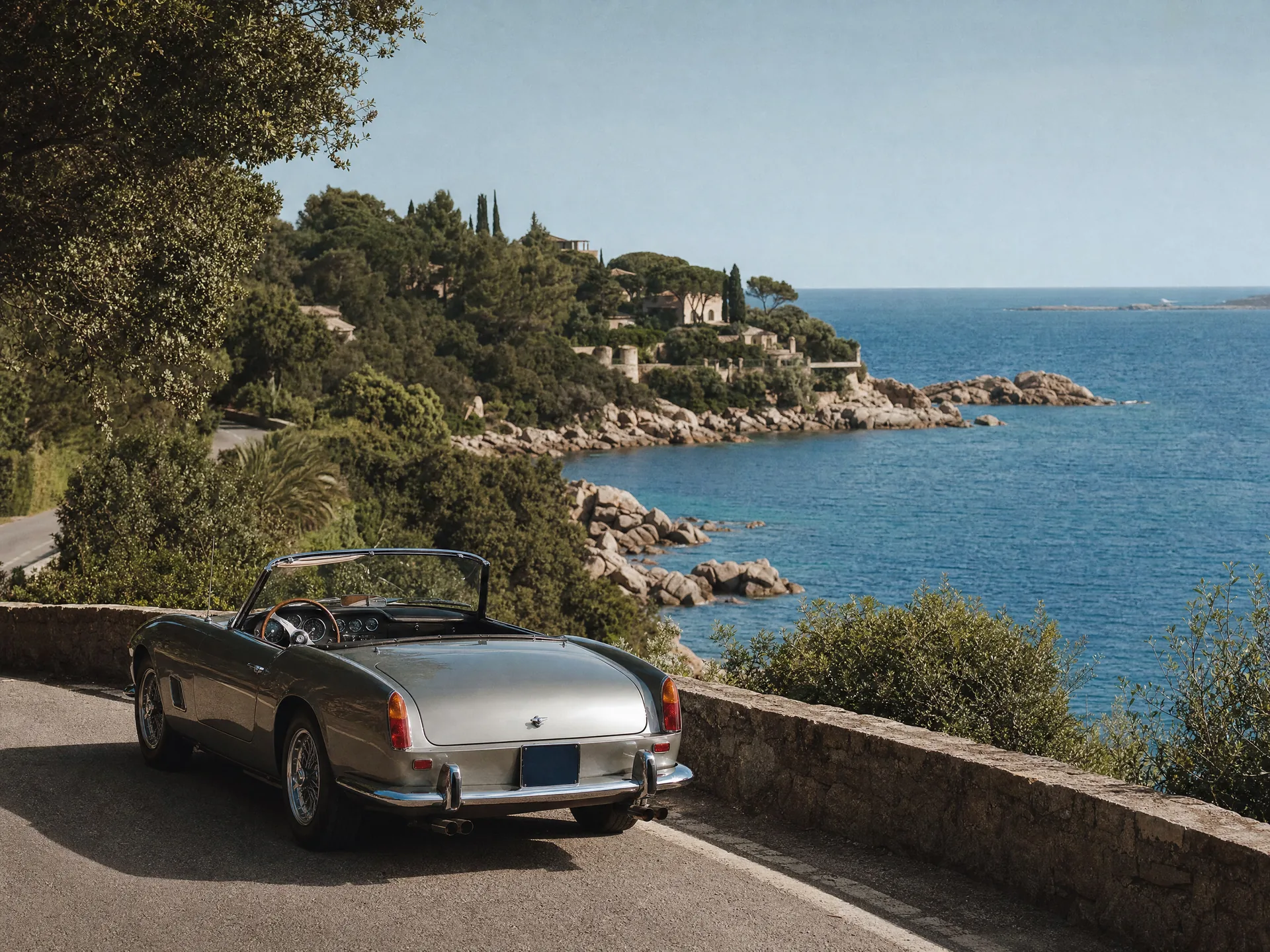
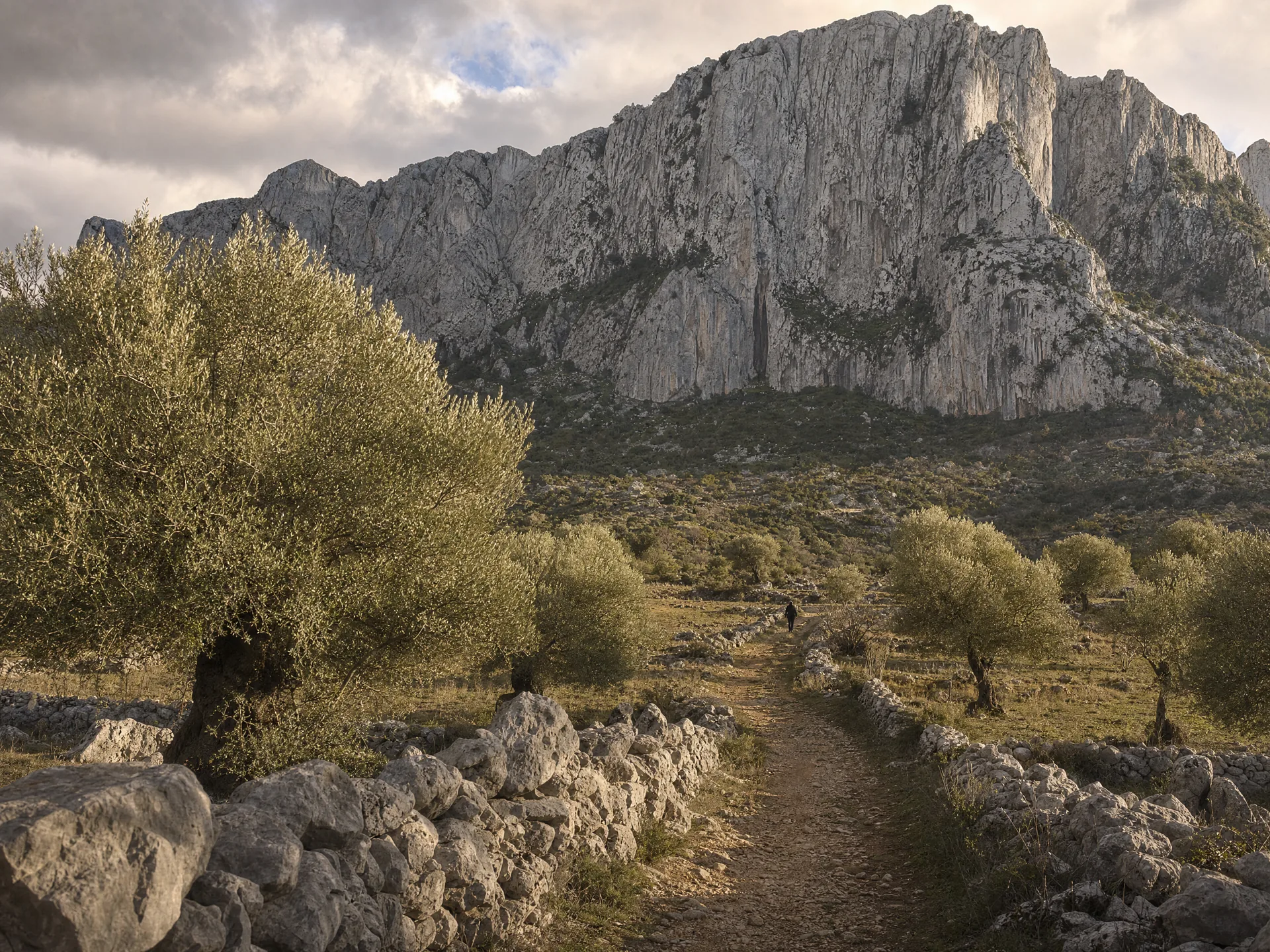
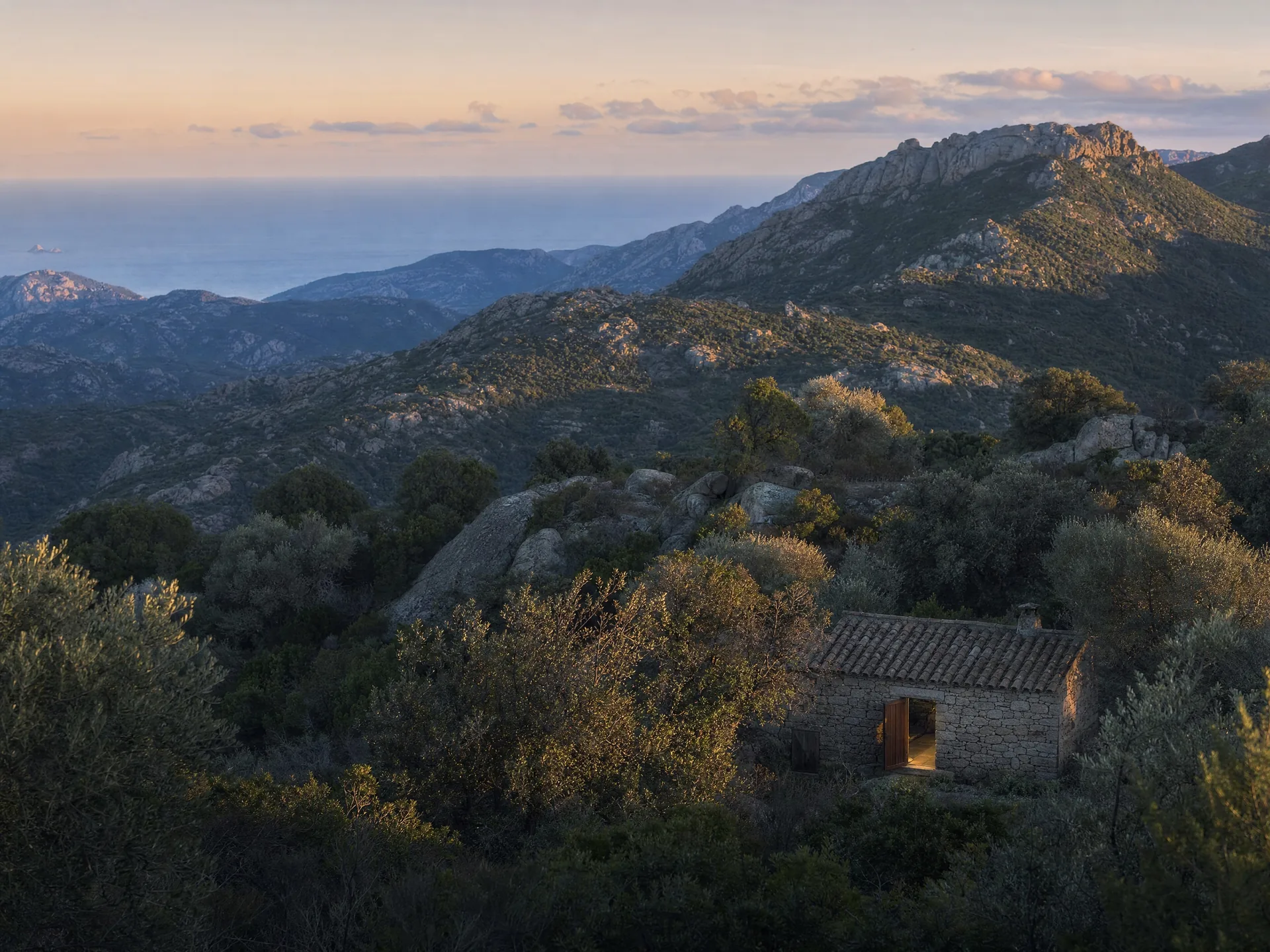
Arrive in Corsica by private aircraft and continue south, where roads narrow, villages disappear and the landscape becomes progressively wilder. Somewhere between mountains, maquis and sea, a centuries-old stone residence is waiting. There is no grand hotel entrance. Your bags simply disappear. The doors are open. The pool is yours. Beyond it lies seemingly endless Corsican countryside.

For the remainder of the afternoon nothing is required of you. Walk. Swim. Sleep. Or don't.

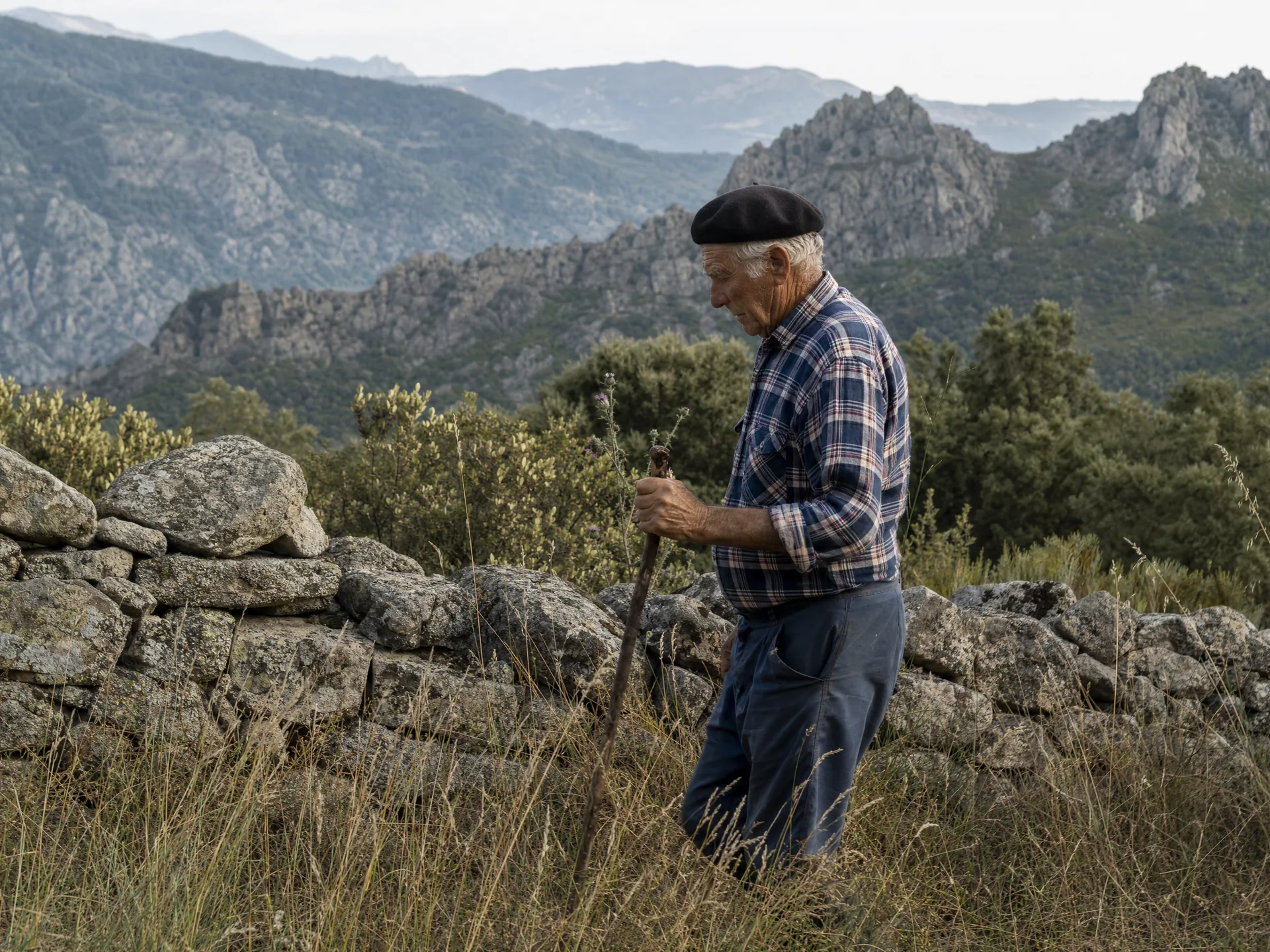
As the light leaves the hills, drinks appear outside your house and the shepherd who grazes the far end of the valley walks up with what his family made this month — cheese wrapped in cloth, bread, a bottle without a label. He stays a while. He is the first of many people on this journey who will not be introduced by a title.

Dinner follows nearby, built from the estate and the island. No formal welcome. You have simply arrived home.

Tonight · Domaine de Murtoli
Stone residence in the Corsican maquis
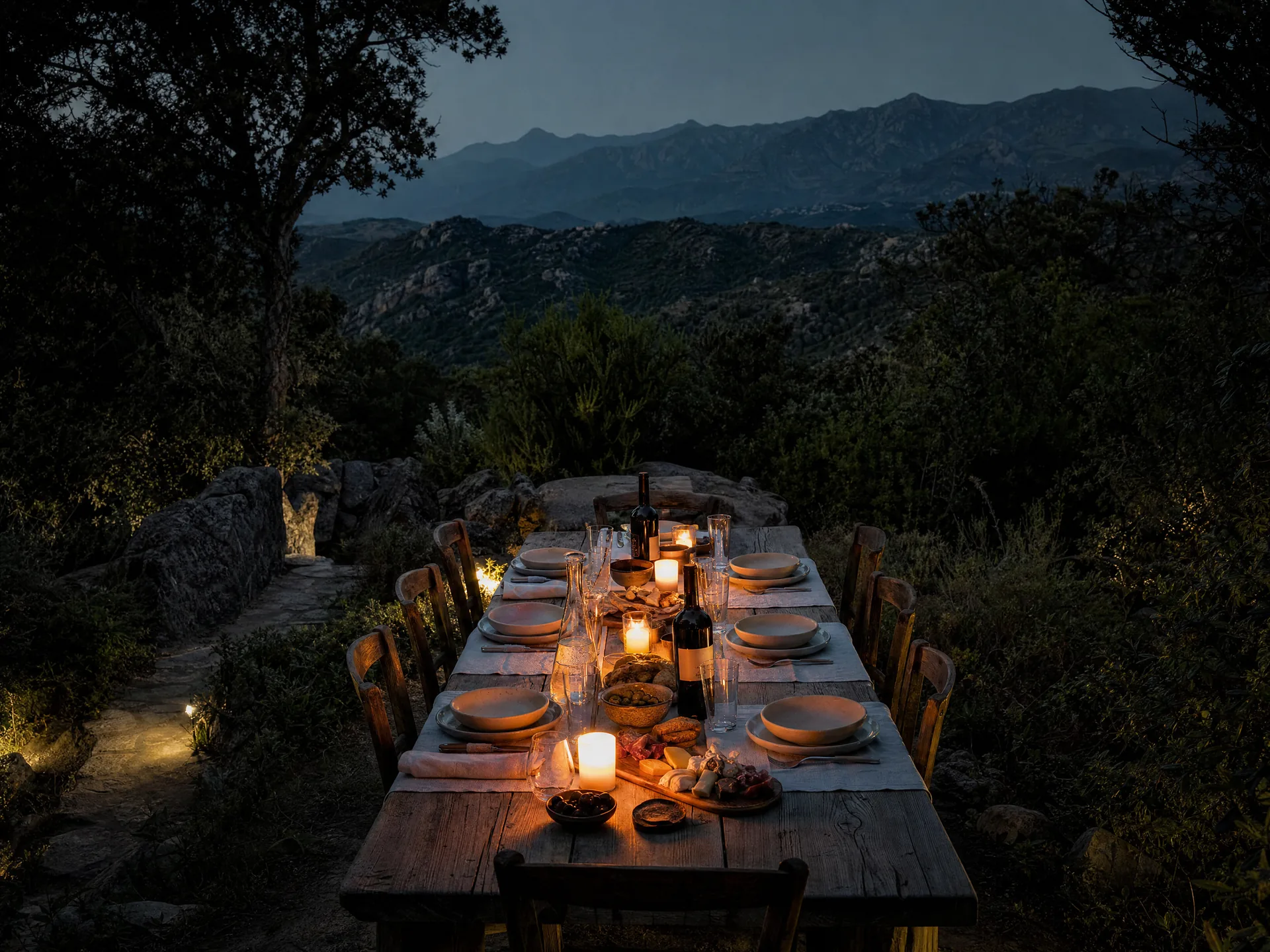
Evening table beyond the pool

Day 02 · The Corsican Interior

The Lens Before the Landscape

“To understand an island, first understand what it refused.”

Before Corsica is shown to you, it is explained to you — once, properly, by someone who has spent a working life arguing about it in print.

Late morning, under the oaks, a Corsican historian and essayist sits with you for as long as the conversation holds: three thousand years of arrivals, the language that survived in the mountains while the ports changed hands, the vendetta as a legal system in the absence of a state, the emigrations that emptied the interior, and the reason a Corsican still tells you which village he is from before he tells you what he does. Nothing is resolved. It is a way of thinking, handed to you at the start so that everything afterwards lands deeper.

Then the countryside, with people rather than monuments: a family whose chestnut groves fed the interior for four centuries, a winemaker working native grapes nobody bothered to export, a village of eleven permanent residents and forty houses. Lunch happens somewhere that belongs completely to its surroundings.

The afternoon is yours.

The Experience · Somewhere in the Maquis

As evening falls we leave again. We won't tell you exactly where — only that dinner is waiting somewhere in the Corsican landscape, and that not everything planned for tonight appears on this page.

Tonight · Domaine de Murtoli
Dinner set in the Corsican landscape

Day 03 · Bonifacio & the Strait

Eleven Kilometres of Argument

“Some borders you can swim.”

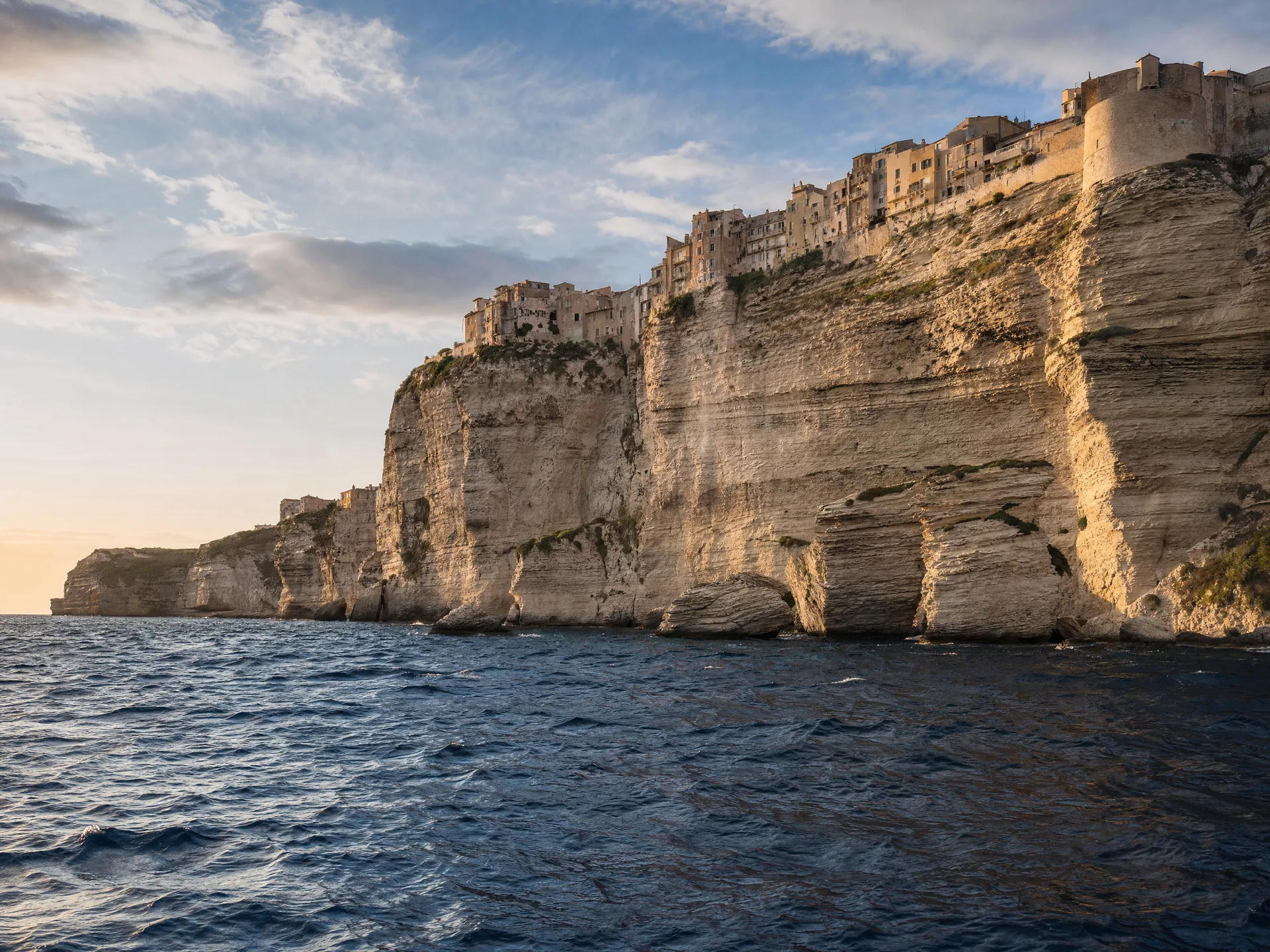
Today the geography does the talking. We approach Bonifacio from the water, because a citadel built on a white limestone cliff was designed to be read from a hull, not from a car park. Genoa held it, Aragon wanted it, Charles V failed at it, and the plague finished what the sieges started. You walk the lanes with someone whose subject is not architecture but consequence.

Then the yacht takes you into the Strait itself and cuts the engines. Sardinia is there, close enough to make the point: eleven kilometres, one of the most dangerous channels in the Mediterranean, and the exact line where France stops being France. Two islands that can see each other every day of the year, speaking languages that grew apart, taxed by different capitals, patrolled by different navies. Nobody has to explain why the interior of each island distrusts its own coast. You are looking at the reason.

Lunch on deck, drifting. Then back along the cliffs as the light moves across them. Your room has not changed. Your bags have not moved.

The Experience · The Uncomfortable Conversation

Over dinner, a Corsican who has spent thirty years on the difficult side of the argument about land, tourism and whom Corsica is permitted to sell itself to. He knows what our guests represent. He has agreed to say so anyway. We will not resolve it for you.

Tonight · Domaine de Murtoli
Clifftop citadel of Bonifacio

Day 04 · The Lavezzi Islands & the Forge

The Hand and the Blade

“Ask a maker who takes it after him.”

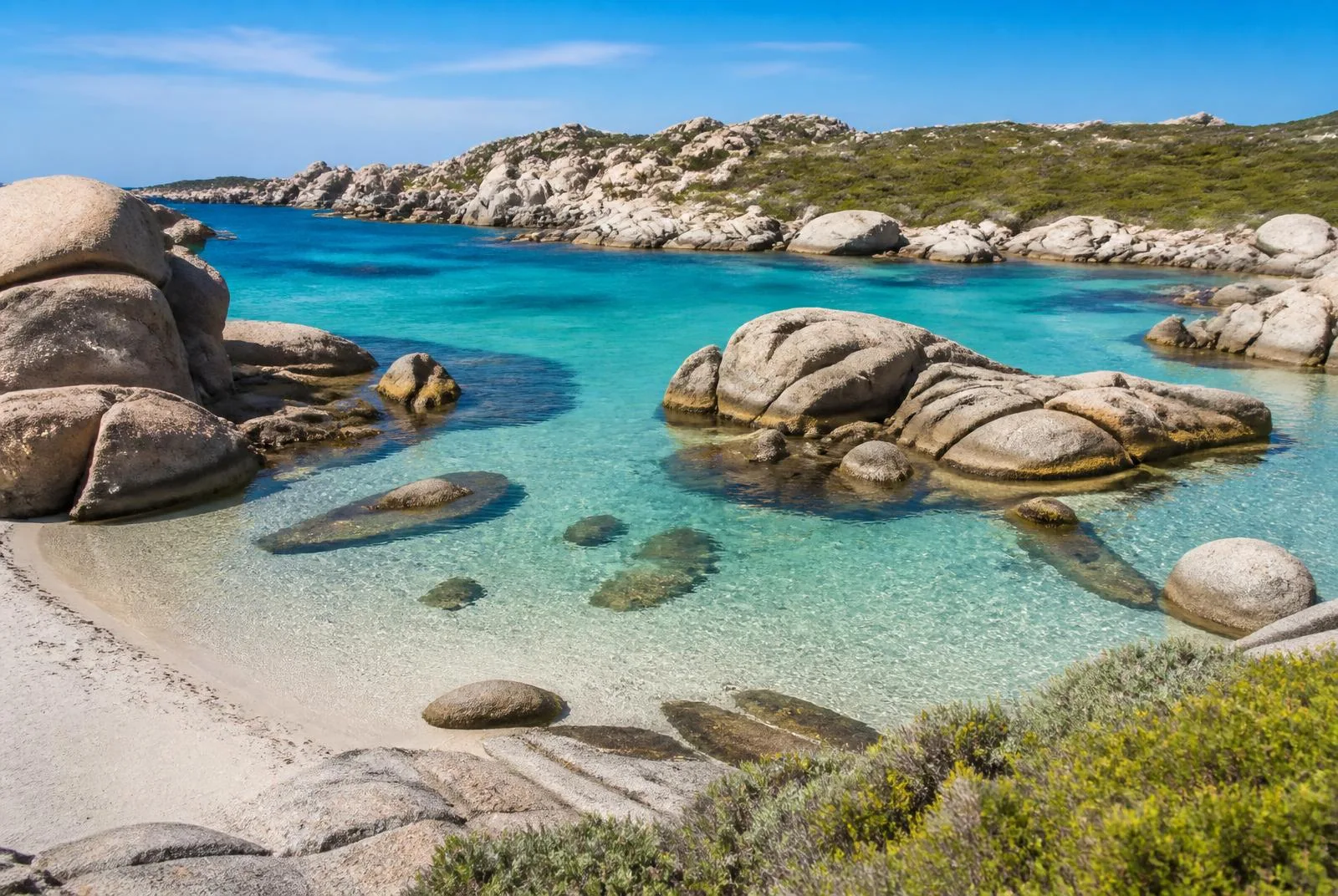
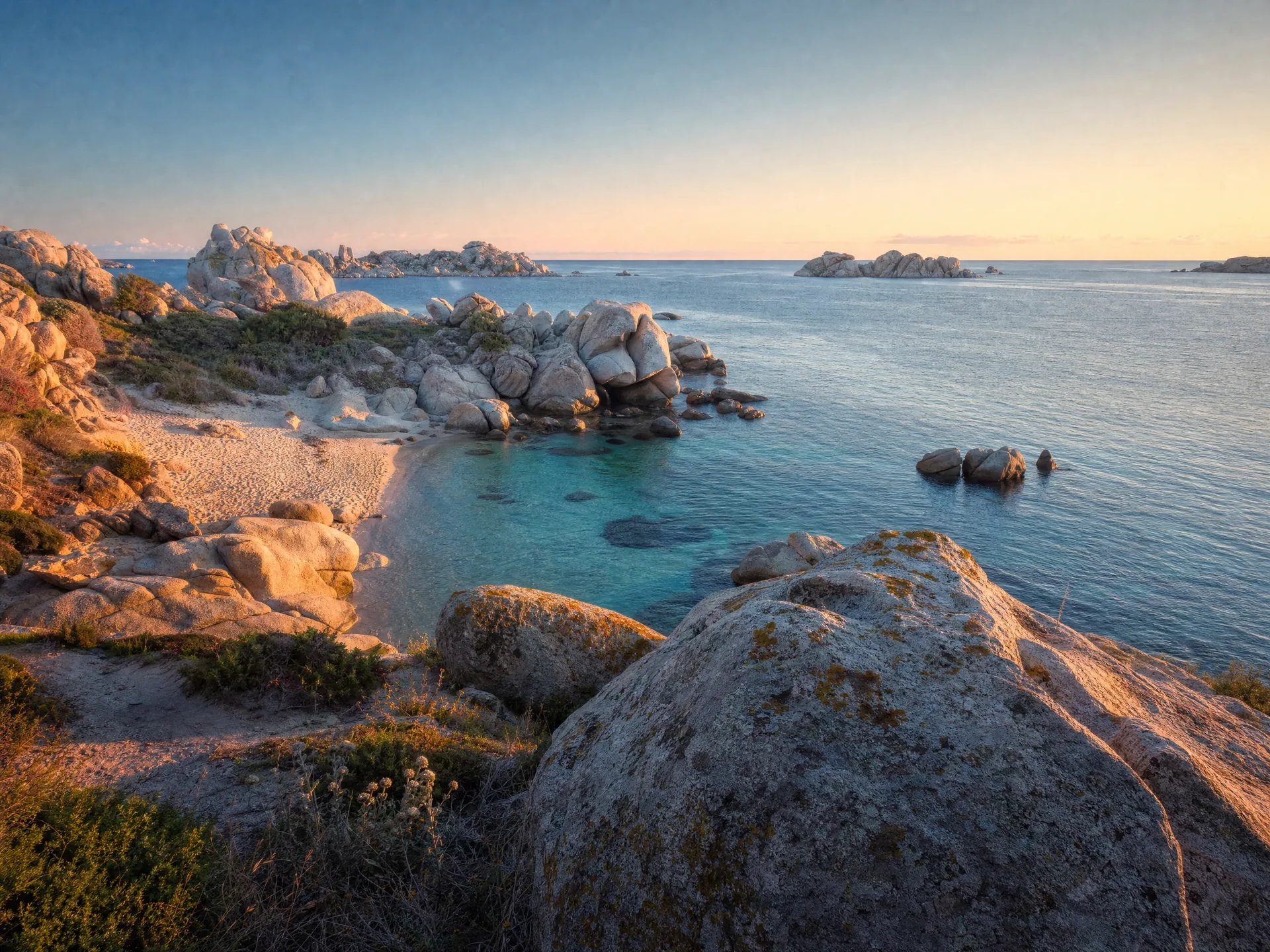
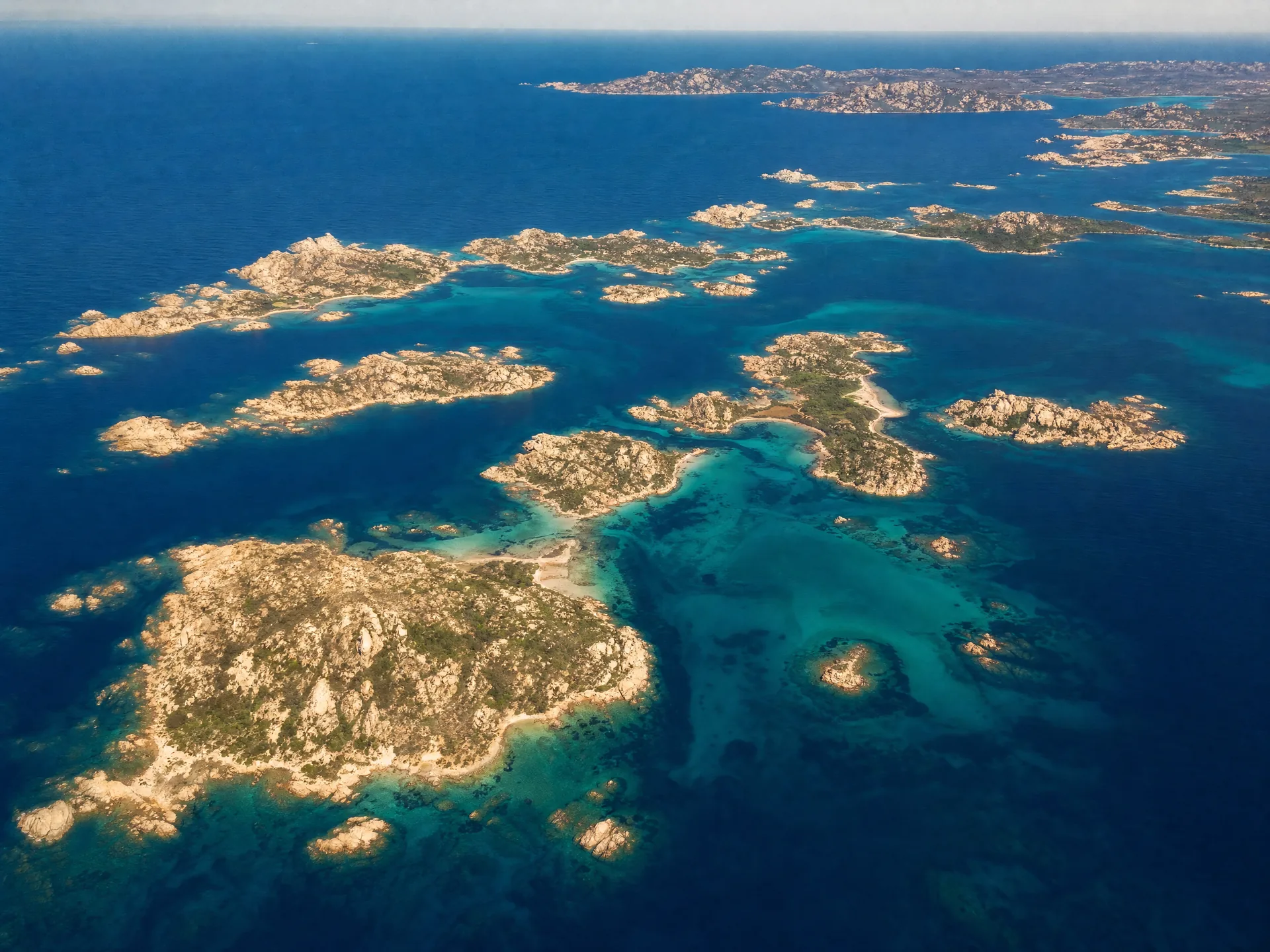
Morning belongs to granite islands, transparent water and coves with no road. Swim, snorkel, go ashore, find lunch when hunger suggests it rather than when a reservation dictates it. There is deliberately very little itinerary before three o'clock.

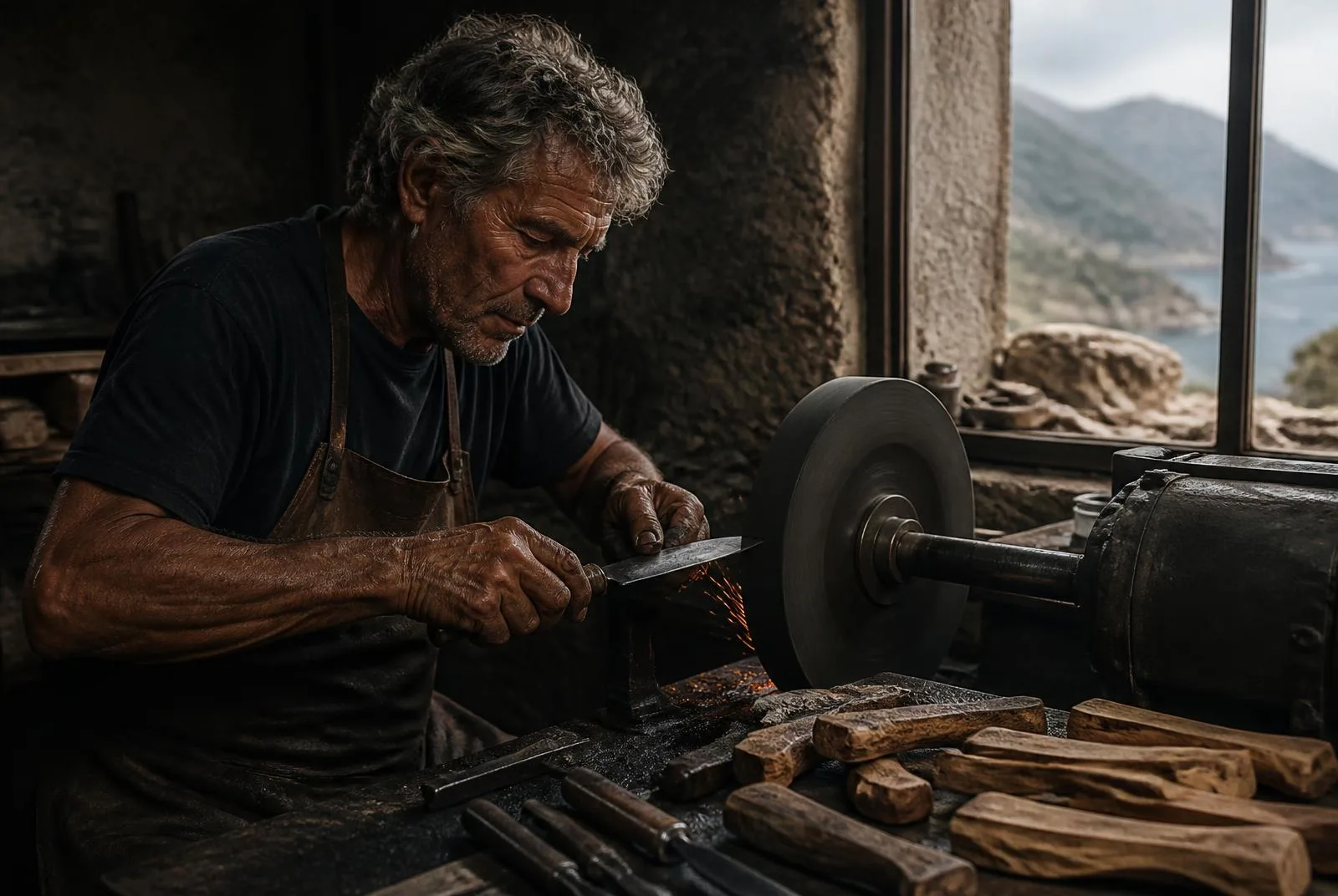
Late afternoon, inland, to a workshop that smells of hot steel and juniper. Corsican knives were carried by shepherds, not collectors; the shape in your hand exists because of one specific job done ten thousand times. You are put to work — the wheel, the horn, the fitting — badly, and that is the point. The body learns what a briefing cannot.

Before you leave, ask him the only question that matters in a craft this small: who takes it after you? The answer is usually complicated, occasionally nobody, and always the truest thing said that day. The blade you started stays on his bench. It will find you again.

Tonight · Domaine de Murtoli
A granite cove in the Lavezzi islands, water clear to the sand
A Corsican knife-maker at the wheel in his workshop

Day 05 · The Burned Hills

What the Fire Took

“Every Corsican family can name the summer.”

There is no departure time this morning. Ride through the estate, walk down to the sea, take a long lunch and make it longer. Read beneath an olive tree. Change your mind.

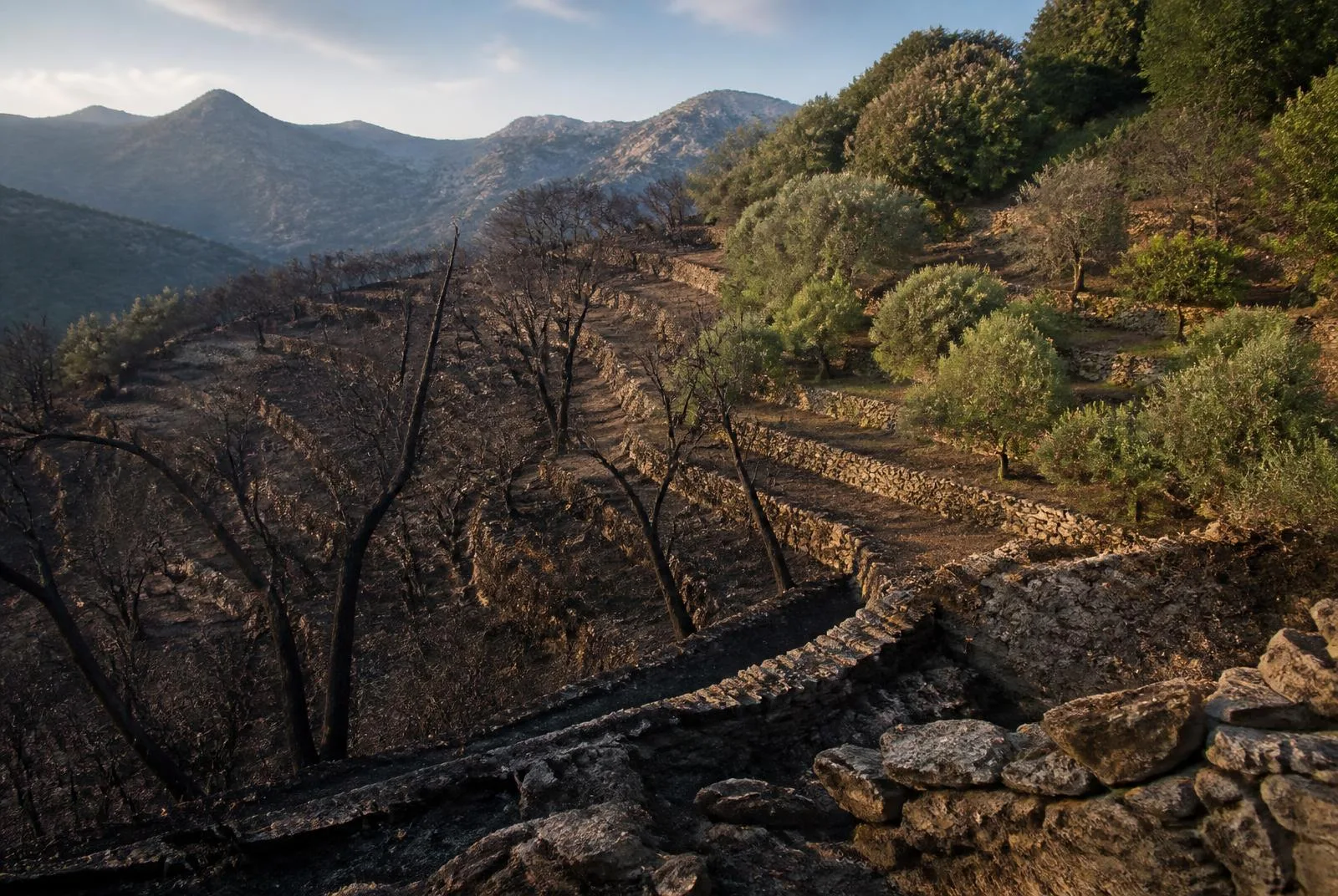
Then, in the softer part of the afternoon, twenty minutes inland to a hillside that still shows the line where a fire stopped. The family that farms it lost the upper terraces, the cork oaks their great-grandfather planted, and two of the buildings. They will tell you what that night was, in the first person and without dramatics: the wind direction, the hour, what they carried out, what they went back for.

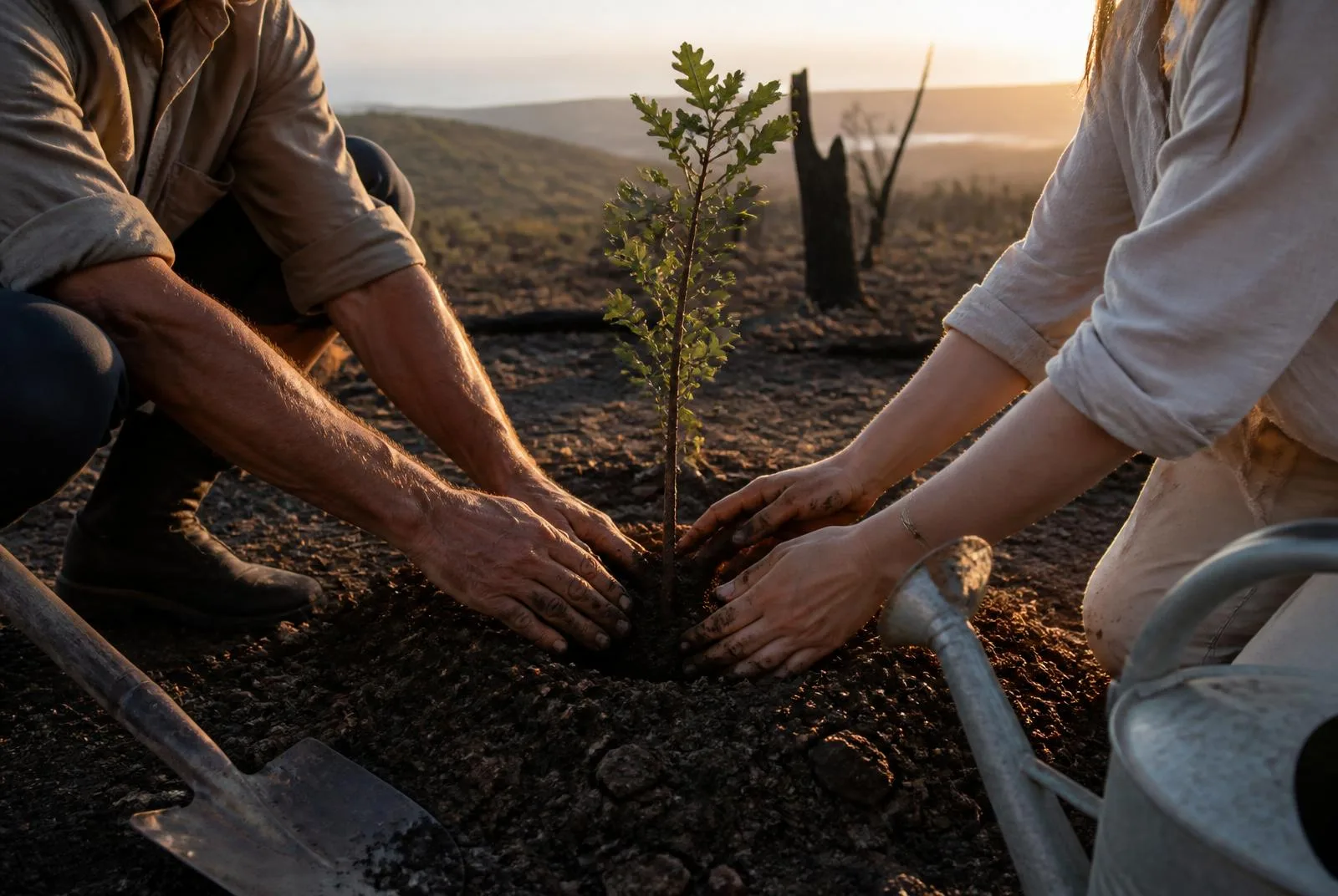
Then you plant with them. Cork oak and olive, on the terraces the fire cleared, at the spacing they choose, in ground they will still be working in forty years. Each planting is entered in the commune register with the date and the name of the guest. Nobody photographs it for us.

Tonight is your last evening in Corsica. We keep it quiet. Tomorrow, the sea.

The Layer

Testimony and contribution on the same hillside. You will not see these trees mature. That is precisely what makes the gesture worth making.

Tonight · Domaine de Murtoli
The line where the fire stopped: burned terraces on one side, olives on the other
Planting a young cork oak on the cleared terraces

Day 06 · Corsica → Sardinia

The Crossing

“Between two islands, the passage is the argument.”

This morning you leave Murtoli. There is no airport.

The yacht is waiting on the Corsican coast. Board, settle, turn south. Behind you Corsica, ahead Sardinia, and between them the strait you looked at three days ago and now have to cross. Somewhere in the channel the captain hands you the helm and the chart and shows you what the wind does between two land masses — why this water sank so many ships, why the islands never merged, why every empire that wanted the western Mediterranean needed one of them.

Lunch on deck. Swim when the water demands it. Then the landscape fragments into granite, white sand and impossible blue: La Maddalena.

From this evening, the day's position is marked on your chart in the captain's hand, and a small bottle is drawn from the water you swam in and labelled. You will understand why on the ninth night.

Your House in Sardinia

Not a hotel. An exceptional private waterfront estate selected specifically for you. The staff are already there. Your luggage arrived before you did. The doors are open, the drinks are cold, dinner is being prepared. You step ashore into your home for the next four nights.

Tonight · Your private Sardinian estate

Ancient Sardinian inland landscape
Traditional Sardinian table

Day 07 · Costa Smeralda

The Coast That Was Invented

“In 1962 this shoreline had no name and no road.”

Today we take the Sardinia everyone has heard of — on our terms, and with the file open.

A leisurely morning, then the Costa Smeralda in beautiful cars. What you are driving through is one of the most audacious pieces of private planning in postwar Europe: a consortium bought a malarial, roadless coast from families who had no reason to value it, wrote its own architectural code, invented a vernacular that had never existed, and created billions in value on land that had produced almost nothing.

You hear it from someone who held real authority over the outcome — a former regional government figure, or a senior planner from the consortium years — on the questions that still divide the island: who was compensated and how, what the code protected and what it erased, where the water and the revenue actually go, and what a coast worth this much does to an interior that emptied while it was being built.

Then a long lunch above the water, perhaps private art or design, the yacht in the late afternoon, Porto Cervo toward evening if the mood is right. Or not. Nothing today is compulsory. Enjoy it without apology — because tomorrow we leave this Sardinia behind.

The Layer · Proximity to Consequence

Not a lecture about development. A conversation with someone who signed things.

Tonight · Your private Sardinian estate

Sardinian estate and pool

Day 08 · Barbagia & the Supramonte

The Island They Don't Know

“Long before the beach clubs, there was another Sardinia.”

This morning we turn inland. The sea disappears, the roads rise, granite gives way to limestone, and you enter the oldest continuously inhabited interior in the Mediterranean — seven thousand nuraghe towers, a language older than the arrival of Latin, and villages that have been quietly governing themselves for longer than most European states have existed.

Part of it you walk, on a transhumance path a shepherd's family has used for generations. It is the only way to understand why the interior looks at the coast the way it does.

Then the makers, in their own rooms rather than a showroom: a weaver at a horizontal loom working patterns whose meaning is regional and exact; a woman making the bread that once took a full day and a whole family; a mask carver whose winter carnival is a pre-Christian survival the island has never bothered to explain away for visitors.

Lunch will happen somewhere along the way. We could tell you with whom. We would rather not.

The Experience · The Private Table

Evening is the personal seam of this journey: a real house in the mountains, a real family, four generations, no service and no performance. The grandmother remembers when the village held eight hundred people; her grandson works in Milan and comes home in August. Both are at the table. That conversation is Sardinia.

Tonight · Your private Sardinian estate

Sardinian ingredients and wine

Day 09 · Northern Sardinia

Return to the Sea

“The last full day should feel like freedom.”

There is intentionally nothing educational today. No archaeology, no briefing, no agenda worth printing.

The yacht leaves when you are ready. The captain has one instruction: find the best water in Sardinia today. Perhaps La Maddalena. Perhaps Caprera. Perhaps a bay nobody has mentioned. Weather decides. Swim, tender ashore, go down the granite walls with someone who has been freediving them since he was nine, and let lunch stretch through the afternoon.

Late in the day the last bottle is filled and labelled, and the chart is marked for the ninth and final time.

And eventually, when it feels as though the day should be ending, there is somewhere else we need to take you.

The Finale · The Log of the Two Islands

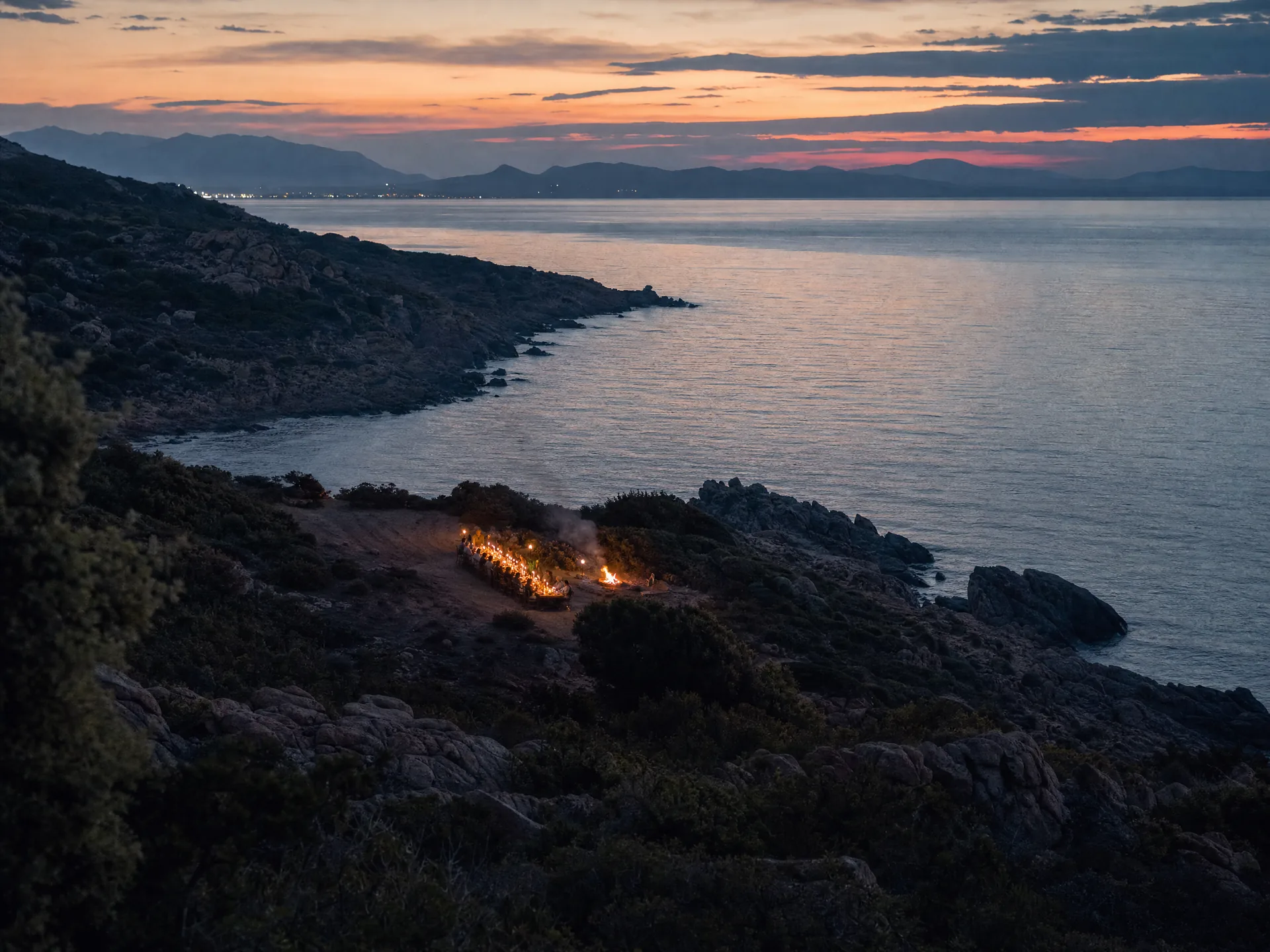
A table is set where the water reaches it, and on it is your own journey turned into objects: the captain's chart with nine days marked in pencil; nine small glass bottles of the exact water you swam in, in order, each labelled with position and hour; the Corsican blade you began on the forge bench, finished, unmarked except for the date; the bread recipe in the grandmother's hand; the commune register entry naming the terrace where your trees now stand; and the wine from the vines you walked through on the second day. Then the launeddas begin — three reeds, one breath, a sound this island has been making for three thousand years. Nothing is announced. Nobody explains it. The rest is deliberately absent from this itinerary.

Tonight · Your private Sardinian estate

Sardinian coast at dusk

Day 10 · Sardinia

Leave While You Still Want More

“A great journey should finish one day too early.”

Breakfast wherever you want it. Swim once more. The house stays yours until you leave it.

The aircraft is ready when you are. Somebody carries your chart and your nine bottles down to it. They travel better than photographs.

Two islands taken many times and never entirely held. You were let into both.

The blade will want sharpening in about a year. Bring it back. He asked.

The Two Wild Islands

You will leave with the exact water you swam in.

  • 10 days · 9 nights
  • 5 nights in Corsica
  • 4 nights in Sardinia
  • Two private homes · One crossing by sea
  • Nine layers of access · One log of your own

Enquire

Begin this journey

This itinerary is a starting point, not a product. Tell us your dates and we will rewrite it around your family.