CIRCLE & KEYPrivate Travel Atelier
← Africa

Morocco

The Kingdom of Senses

Fourteen Days Through Morocco

14 Days · Casablanca · Fez · Sahara · Skoura · Marrakech

The Preface

Morocco does not reveal itself quietly.

It arrives in layers. The smell of cedar and charcoal. A door opening into a courtyard you could never have imagined from the street. Leather being worked as it has been for centuries. Mint crushed into hot tea. The call to prayer floating above a city at dusk.

But scent is only the surface. Beneath it there is a kingdom that has spent a thousand years deciding what to keep. This journey is built around the people who make that decision: the economist who can explain how a country of two coasts and one mountain range trades; the historian who will give you a way to think before you are given anything to see; the tile master whose apprentices will outlive him; the woman in the mellah who still tends the names of families who left.

This is not Morocco seen from the outside. It is Morocco entered slowly, and by invitation.

Day 01 · Casablanca

The First Door

Chapter I · The Atlantic — Ivory · Ocean · Geometry · Modern Morocco

“Forget the film.”

Casablanca today is Morocco looking outward: confident, commercial and distinctly its own. There is no program waiting when you arrive. You are met at the airport and taken directly into the city, where your first address is Royal Mansour Casablanca — a legend of the White City, reborn.

Settle in. Look out over the Atlantic. The first evening belongs to you: a drink as the glare turns to gold, dinner somewhere unannounced.

One thing only is arranged. Late, over tea in the courtyard, you meet the person who will frame the country for you — a Moroccan historian and writer who works on the Andalusi inheritance, the Amazigh south and the long conversation between the two. Nothing is shown tonight. You are simply given a way to think. Everything in the fourteen days that follow lands deeper because of it.

The Layer

Interpretation before immersion. The lens comes first; the sights come after.

Tonight · Royal Mansour Casablanca
Casablanca at the edge of the Atlantic

Day 02 · Casablanca & Rabat

Two Faces of a Kingdom

“One city is Morocco becoming. The other remembers where the kingdom came from.”

Casablanca and Rabat are separated by little more than an hour, yet they tell very different stories. We begin with Casablanca's own century: the Art Deco streets, the Habous quarter, elegant Anfa, and the Hassan II Mosque at the edge of the ocean, half of it seemingly belonging to the sea.

Then north to Rabat, where the mood changes — the Kasbah of the Udayas in white and blue, Hassan Tower, the gardens, the quiet.

In Rabat we also sit down with someone who spent a career inside the machinery: a former senior figure from Bank al-Maghrib or Morocco's diplomatic service, depending on who is in the country that week. The conversation is about how a kingdom with an Atlantic coast, a Mediterranean coast, a mountain wall and a desert border actually earns its living — phosphates, ports, water, wind, the long courtship of Europe and the newer one of West Africa. Not a briefing about the country. An hour with somebody who had to decide for it.

The Layer

Proximity to consequence. Not an expert on the system — someone who ran part of it.

Tonight · Royal Mansour Casablanca
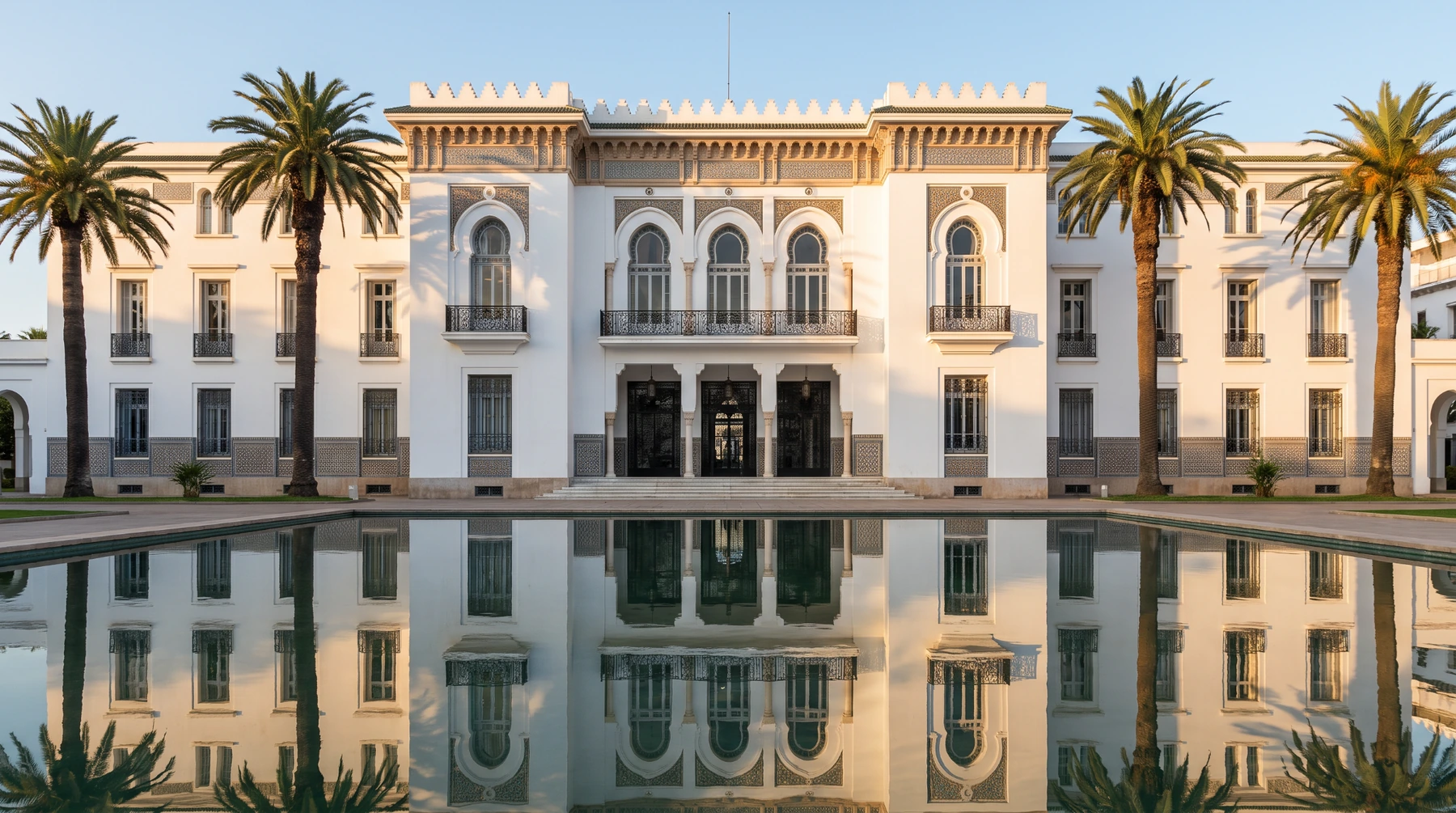
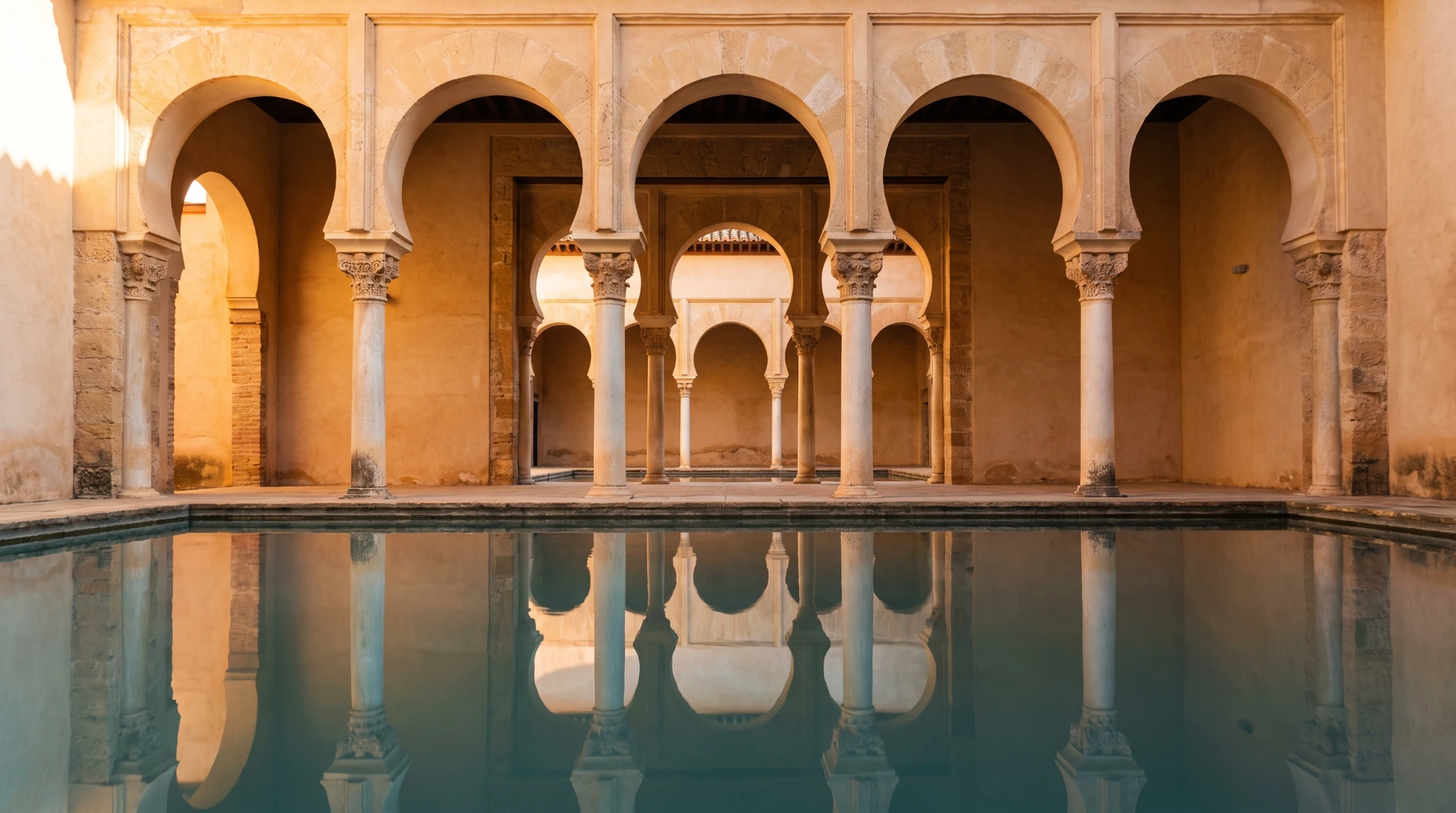
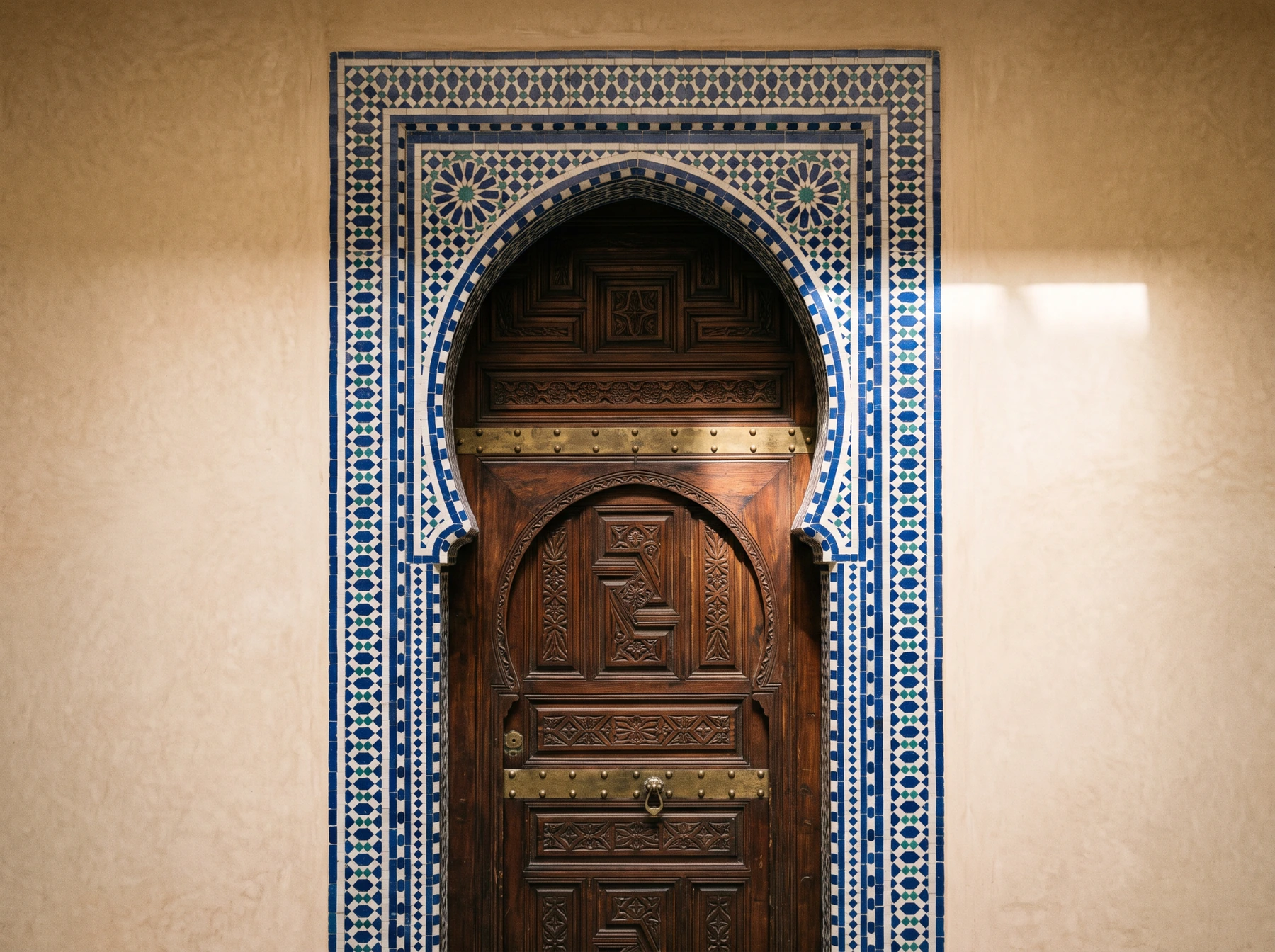
Moorish architectural detail

Day 03 · Casablanca

Taste the City

“No tasting menu. No ceremony. Just Casablanca eating.”

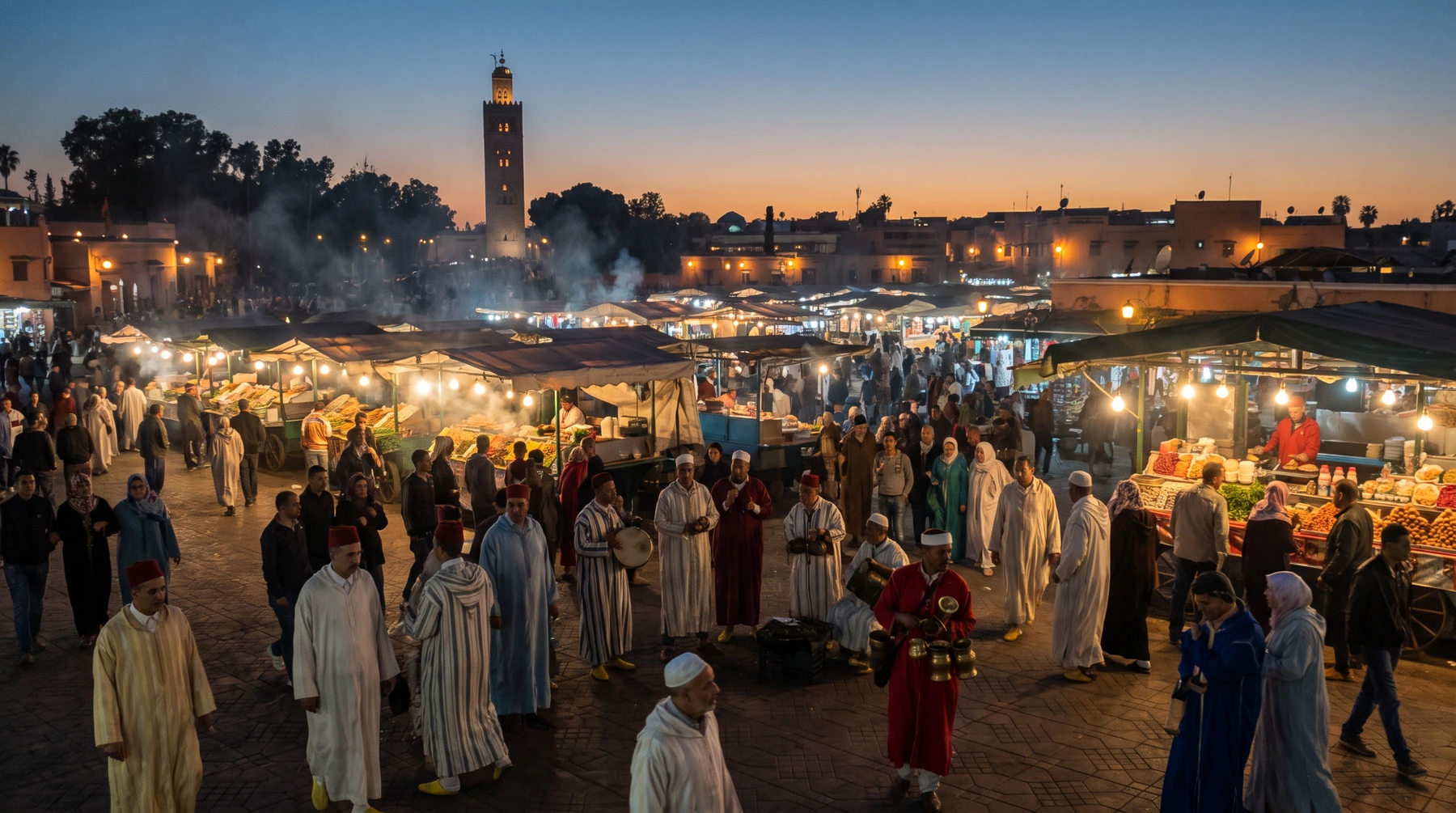
Today we understand Casablanca through food, and through our hands. Not a restaurant but the city itself: the port auction where the night's catch is sold in a language of gestures, the market alleys, oysters from Dakhla, something sizzling over charcoal, a glass handed across a counter whose name you may never learn.

We buy badly and then well, we carry, we grill, we are corrected by a stallholder. The afternoon is deliberately empty.

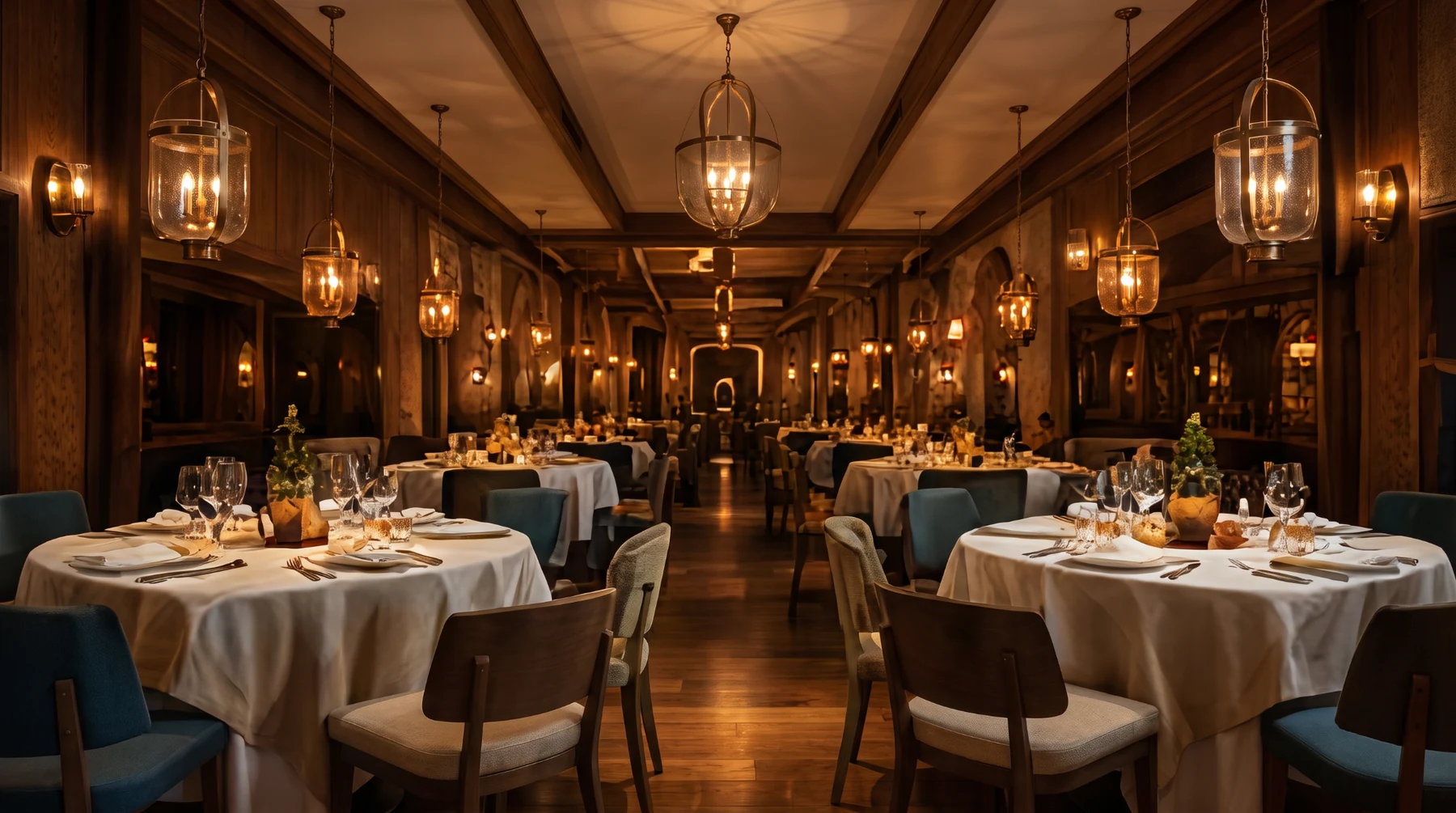
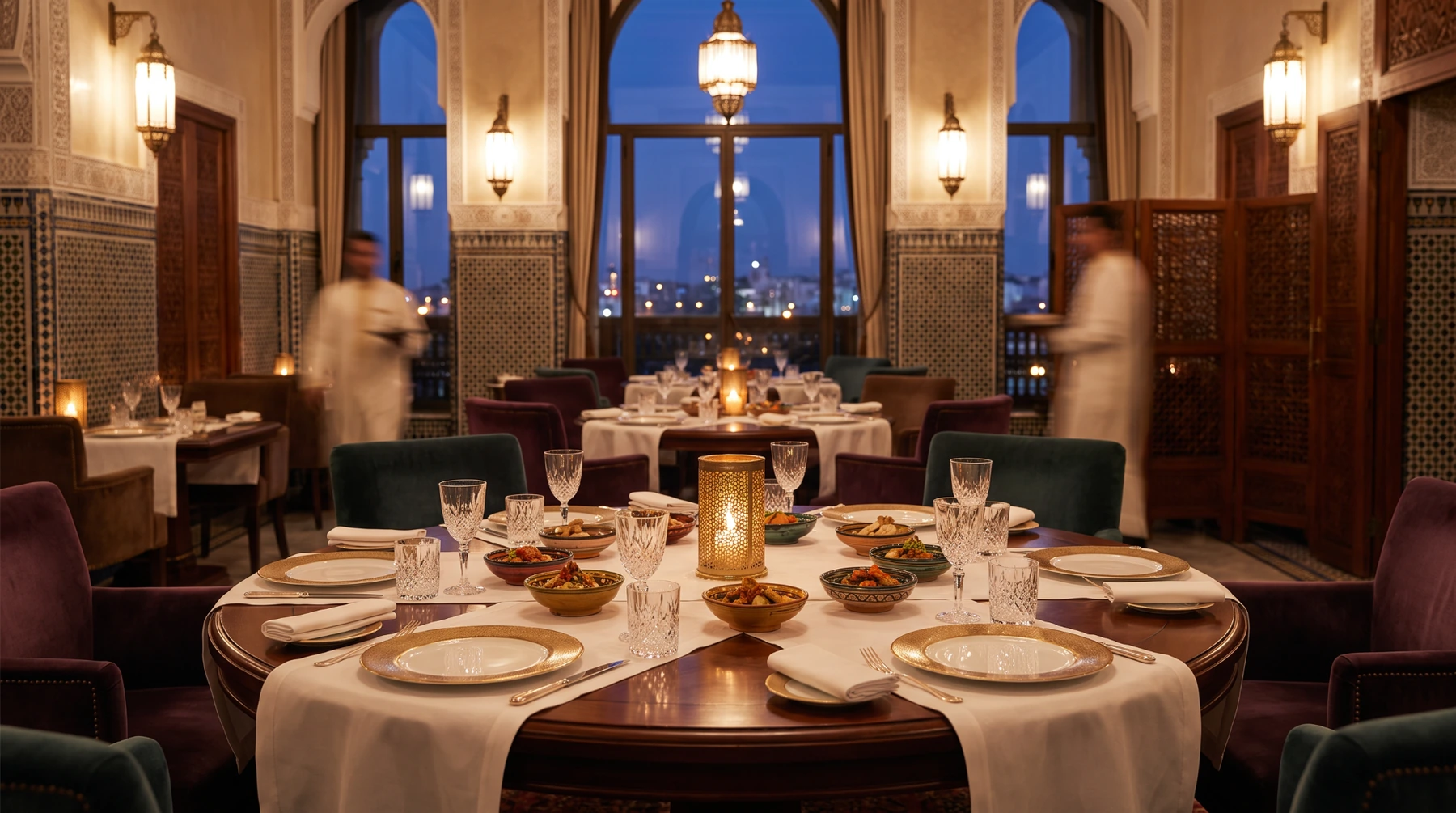
In the evening the same city is seen from above, at La Grande Table Marocaine — the streets you tasted now laid out beneath you. Two expressions of one kitchen, one day apart in altitude.

The Layer

Embodiment. The body learns what a briefing cannot: how a city buys, argues and feeds itself.

Tonight · Royal Mansour Casablanca
Casablanca street food over charcoal
La Grande Table Marocaine above the city

Day 04 · Casablanca → Meknes → Fez

The Road to Fez

Chapter II · The Old Kingdom — Zellige · Cedar · Shadow · History

“By evening, another Morocco is waiting.”

This morning we leave the Atlantic. The land dries, rises, and begins to explain itself. We stop at Volubilis with the archaeologist who works the site — not a guide beside the ruin but the person responsible for it, standing over the mosaic she uncovered, arguing gently about what Rome was actually doing this far south and what the people already here made of it.

Then Meknes: kilometres of wall built on one sultan's ambition, the monumental Bab Mansour, the old Jewish quarter, the granaries built for twelve thousand horses.

Fez by late afternoon. We settle into Riad Fès — courtyard, carved plaster, tile, shadow. Dinner at Dar Roumana, hidden inside the medina walls. Tomorrow we enter the labyrinth.

The Layer

Custodian access. The excavation's director, beside the object she is responsible for.

Tonight · Riad Fès

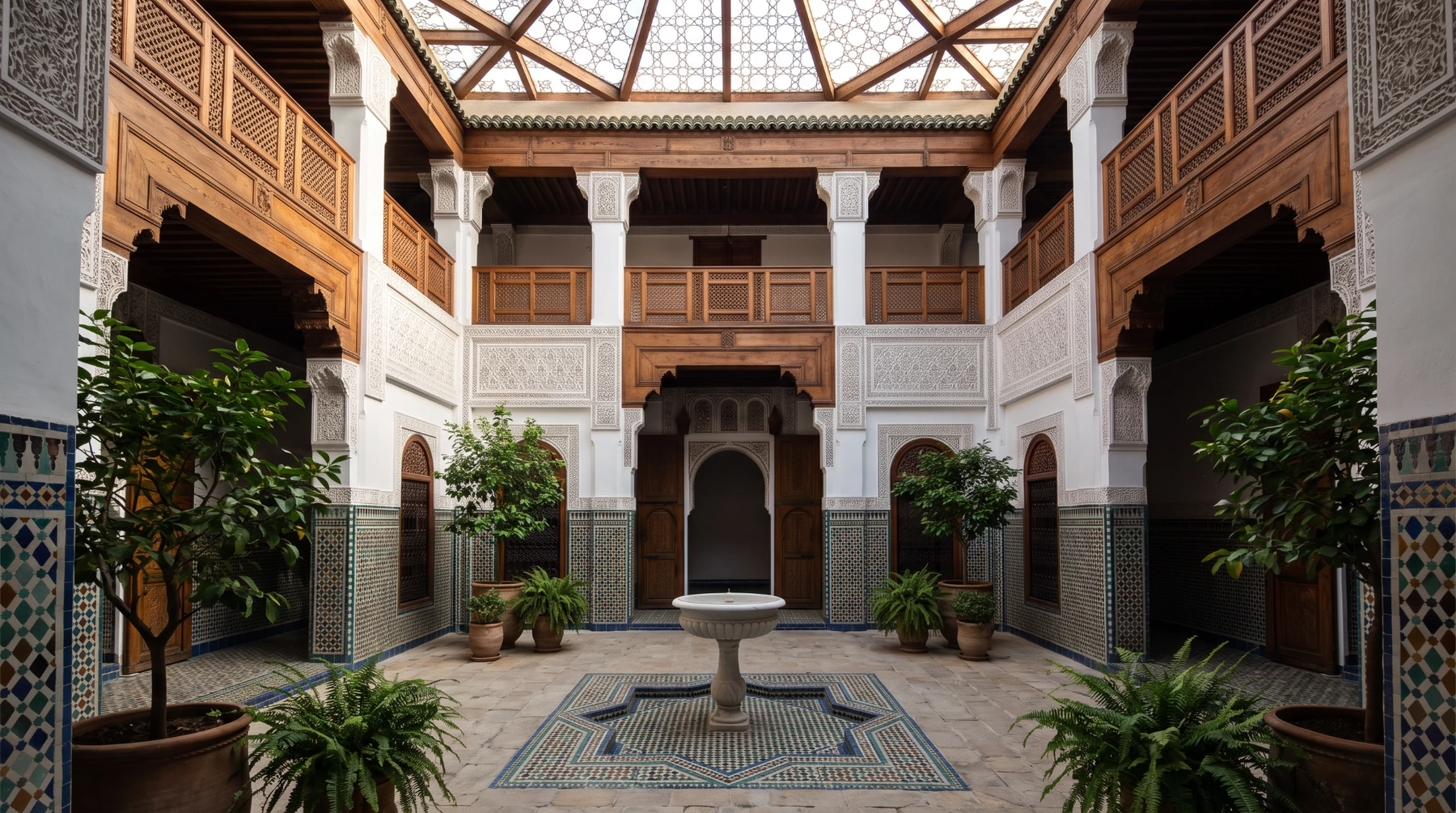
Courtyard of Riad Fès

Day 05 · Fez

Get Lost

“There are cities you visit. And there are cities you surrender to.”

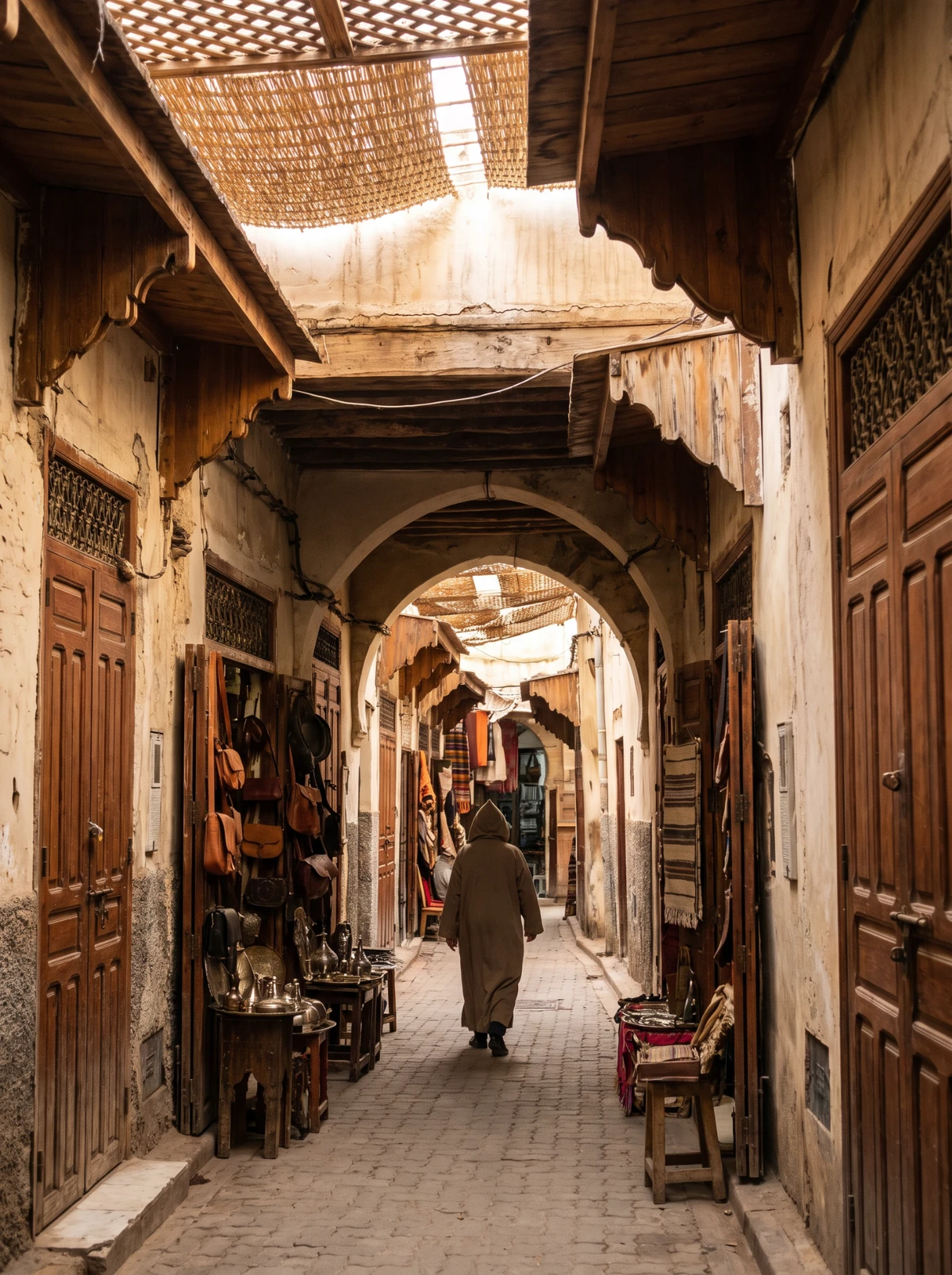
Fez's medina is not a reconstruction of a medieval city. It is a medieval city still working as one: thousands of passages, workshops, mosques, fountains, bread ovens and souks compressed inside its walls, and no vehicle able to enter any of them. The only sensible way to understand it is to stop trying.

So we go in. Past Bou Inania. Along lanes barely wide enough for two. Toward the tanneries, and to Al-Qarawiyyin, founded in the ninth century and still holding its library — where the chief conservator opens a manuscript she has spent years stabilising and tells you, page by page, what a book has to survive to reach you.

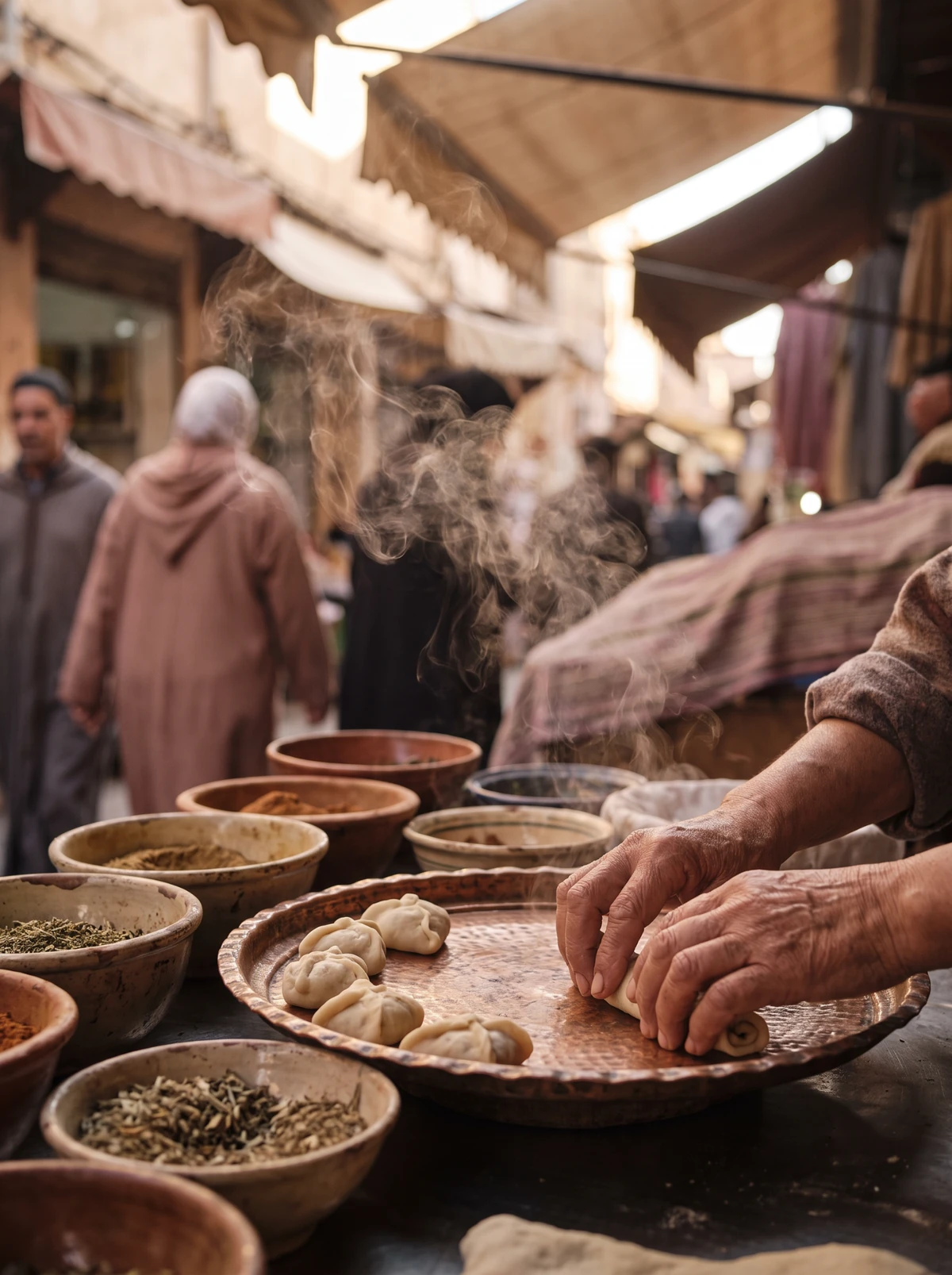
Later the day turns domestic. In a private house we cook with the family who lives in it: spices crushed, arguments about how much smen is too much, recipes that turn out to be biographies. Tonight's dinner is something you helped make, at a table you were let into rather than seated at.

The Layer

Domestic intimacy — a real house, a real kitchen, an unedited conversation.

Tonight · Riad Fès

Rooftops of the Fez medina
Cooking class in Fez

Day 06 · Fez

The Artisan City

“In Fez, the hands still know what the mind has forgotten.”

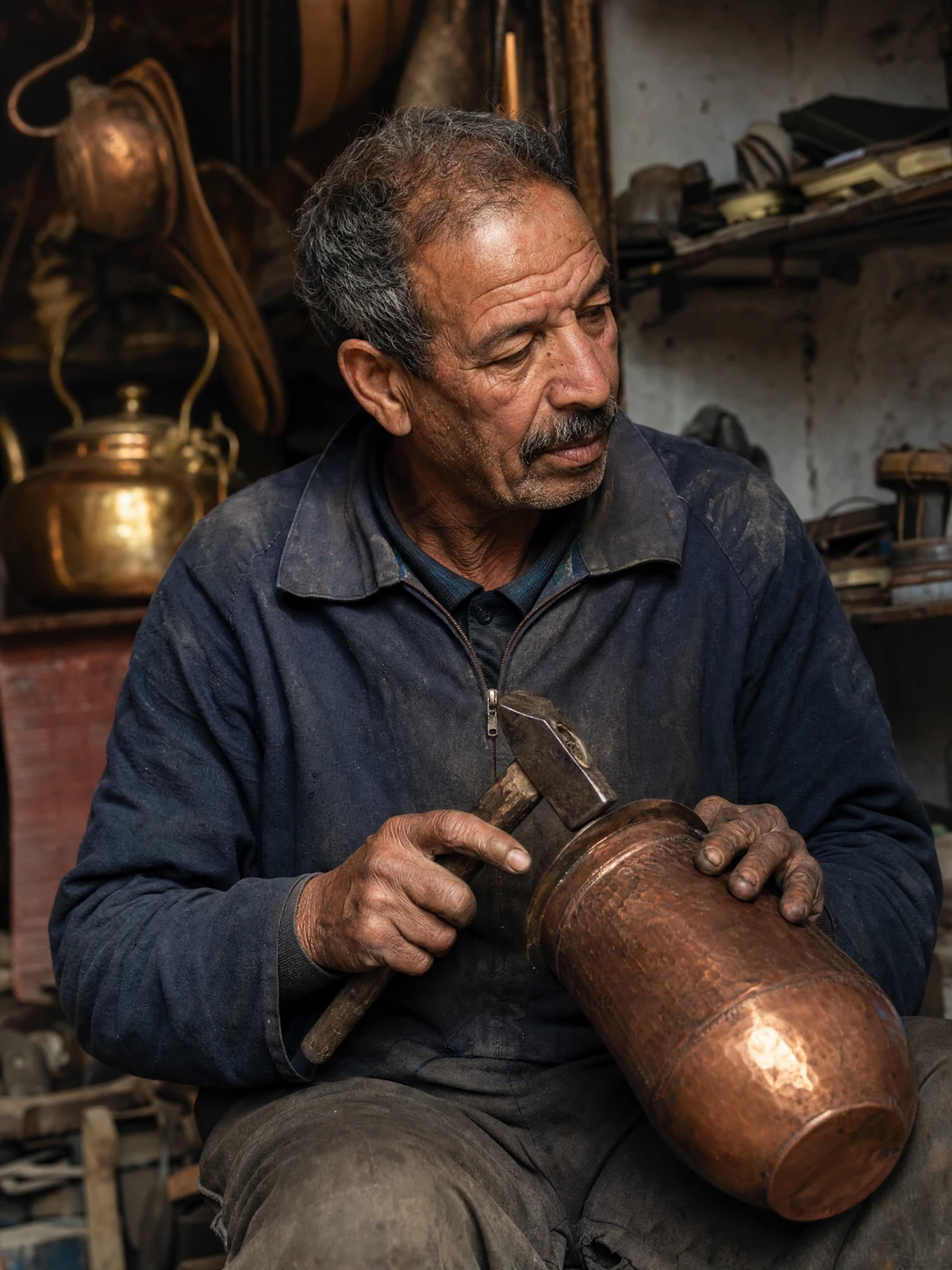
We spend today with the people who keep Fez alive: the weaver at his loom, the tanner in the pits, the zellige cutter who can strike a hundred identical shapes without measuring, the coppersmith, the calligrapher. These are not demonstrations. They are working lives, entered with respect and with time — and with our own hands, badly, on a chisel and a loom, long enough to understand what mastery costs.

There is also a real argument here, and we let you hear both sides of it. Fez's masters do not agree about their own craft: whether machine-cut tile and imported glaze are a betrayal or the only thing keeping the trade alive; whether a restored medina house should be returned to the eighteenth century or allowed to show its repairs; whether a son who leaves for Casablanca has failed his father or saved the family. Nobody resolves it for you. The succession question is asked out loud: who takes this after you?

Lunch is in a restored house in the medina. The afternoon is yours. Dinner is in a small place known mainly to the people who live above it.

The Layer

Craft, mastery, and a dispute the discipline is genuinely having with itself — left open.

Tonight · Riad Fès

Artisan at work in Fez

Day 07 · Fez → Midelt → Erfoud

The Road to the Desert

Chapter III · The Sahara — Gold · Silence · Horizon · Distance

“The landscape becomes the argument.”

We leave Fez early — but first, twenty minutes in the mellah, at the cemetery, with the woman who keeps the register of names. She grew up here when the quarter still had thousands of Jewish families; she can tell you which house belonged to whom, which families went to Casablanca, Montreal, Ashdod, and who still writes to her at Passover. Her memory is a private one, of departures and letters, and she offers it as family history rather than anything larger. It is the quietest twenty minutes of the fourteen days, and the one most guests repeat at home.

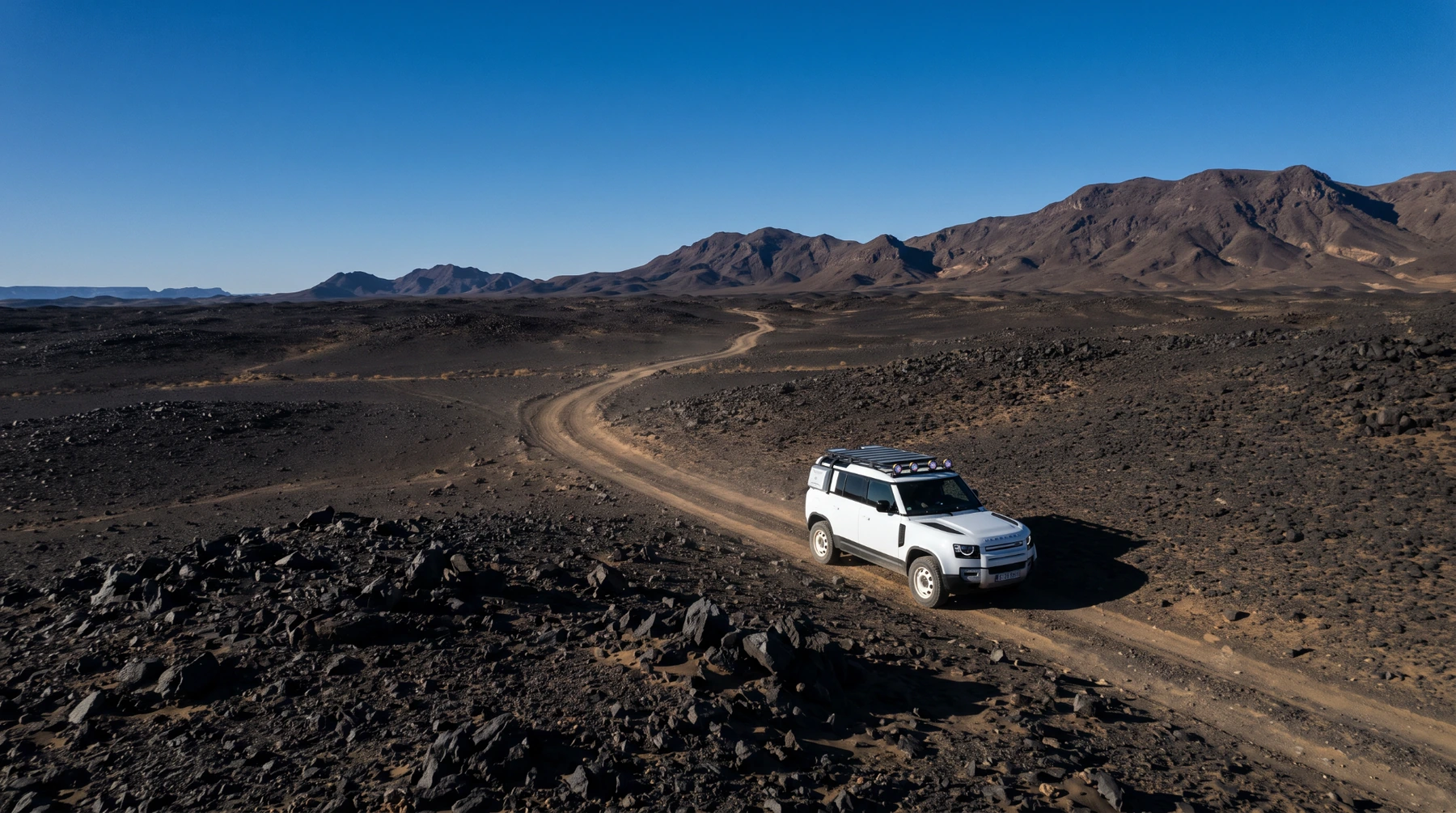
Then we cross the Middle Atlas. The road climbs through cedar forest to the high plains and this is where the geography starts to speak: on one side of the range the rain falls and Morocco farms; on the other it does not, and Morocco travels. Every caravan, every walled city, every negotiation with the Sahara begins with this one watershed. Standing on it, the idea stops being a sentence in a book.

Lunch at Midelt, between two mountain ranges. By late afternoon we are at the edge of the Sahara, near Erfoud, with the light already behaving differently.

The Layer

Witness, then terrain as argument: geography made physically undeniable.

Tonight · Erfoud area

Road toward the Sahara

Day 08 · Erfoud → Merzouga

The Dunes

“The Sahara is not empty. It is full of everything that is not noise.”

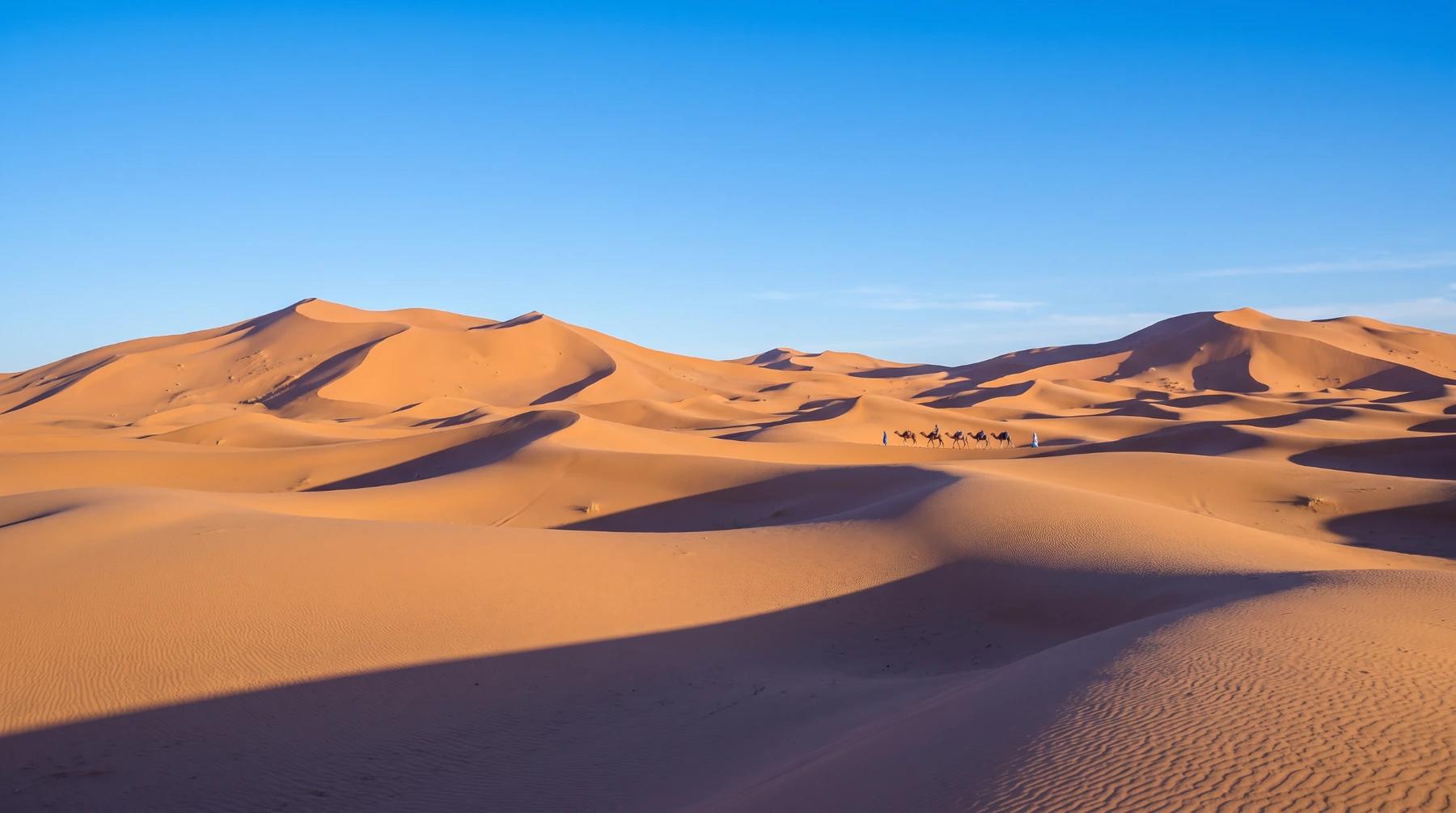
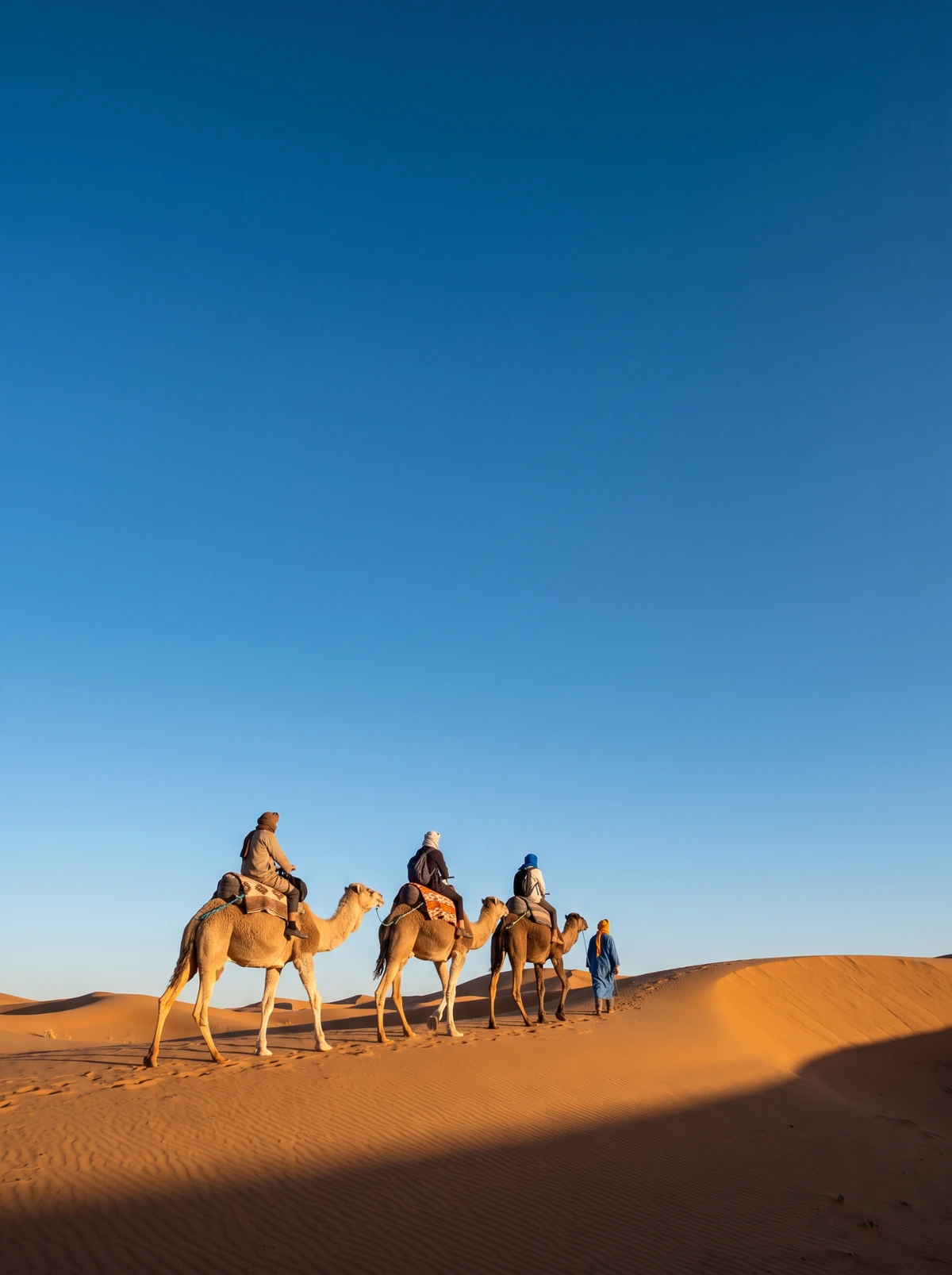
From Erfoud to Merzouga, where Erg Chebbi rises in red waves off a flat plain. We come in by camel or by vehicle depending on the season, and we spend the night in a private camp far from any road — large tents, complete silence, dinner under the stars, no light for a hundred kilometres.

Before dinner we sit with an Aït Khebbach family who were nomadic within living memory. The elder will tell you what the last decades of drought did to a herding life: which wells failed, in what order, which brothers stayed with the animals and which went to the towns, and what a grandson now studying in Errachidia thinks of all of it. It is a story about water and about a family, told by the people it happened to.

Later, a private astronomer reads the sky with you. Then, before dawn, you climb the high dune alone if you want to. Almost everyone does.

The Layer

First-person testimony in the place it happened — then the sky, and the climb.

Tonight · Private desert camp

Sahara dunes at first light
Private desert camp at night

Day 09 · Merzouga → Skoura

The Valley of Palms

“After the desert, the valley is almost unbelievable.”

We leave the dunes early and travel west through the Dades Valley toward Skoura. The land softens. Water reappears — first as a line of green, then as an argument you can see: kasbahs built exactly where the irrigation could reach, and abandoned exactly where it could not.

We walk part of the Todra Gorge, then continue to Skoura and settle into a kasbah inside the palm groves. Along the way, at a ksar being repaired in earth and straw, the mason explains why a rammed-earth wall survives four centuries and a cement repair fails in ten. The oldest technology in the valley turns out to be the most modern argument in it.

The afternoon is slow. The garden is quiet. Nothing further is asked of you.

The Layer

Material and lineage — earth, water, and the reason a wall stands.

Tonight · Skoura

Palm groves of Skoura

Day 10 · Skoura

The Oasis Day

“Silence is not the absence of something. It is the presence of something else.”

A full day around the kasbah. A walk through the palm grove with the gardener who knows every tree in it, and who will explain the oasis as a shared machine: whose water arrives on which day, how the hours are counted, what happens in a bad year.

Then you leave something behind. With the village association, and with your own hands and a great deal of unsolicited advice, you plant a stand of young date palms in a section of the grove that has thinned — the trees registered to the community, marked with a small dedication in your family's name. A palm planted this week will fruit for a grandchild. Someone will send you a photograph of it every year.

Then a long lunch. Perhaps the hammam. Perhaps a book. Perhaps nothing at all. This is the day the journey slows enough to be felt.

The Layer

Contribution. You become part of the oasis' future, not a visitor to its past.

Tonight · Skoura

Oasis garden at Skoura

Day 11 · Skoura → Marrakech

The Red City

Chapter IV · Marrakech — Red · Scent · Rhythm · Dream

“Marrakech is not a place you arrive at. It is a place that arrives at you.”

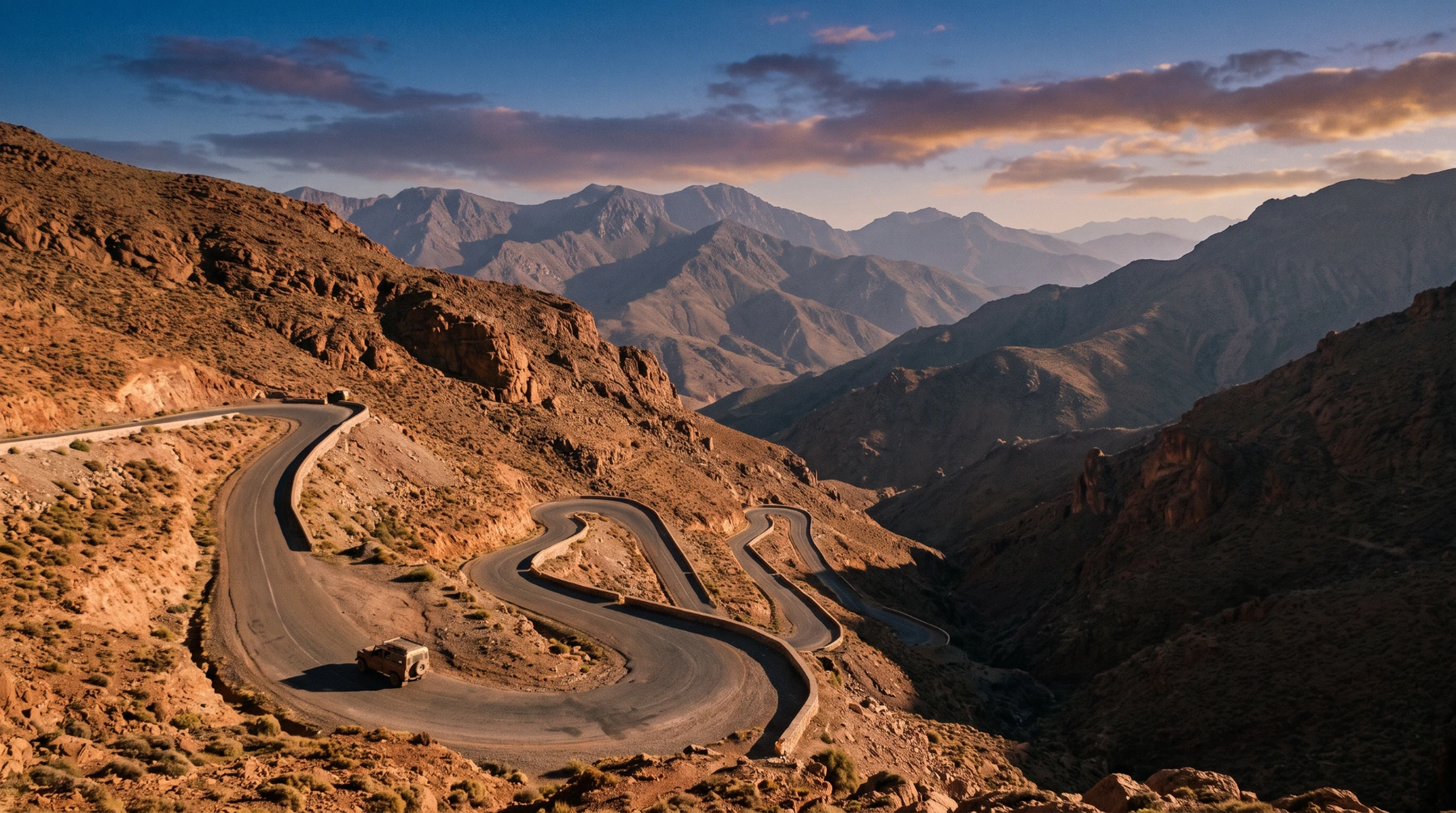
From Skoura to Marrakech over the High Atlas, by the Tizi n'Tichka. It is the most dramatic road in the country and also its plainest lesson: this wall is why the south stayed the south, why the great families of the passes could tax anyone who wanted to cross, and why the Red City sits precisely where it does — at the point where the mountains hand you over to the plain.

We stop for lunch with a view long enough to see it. By afternoon we are through, and Marrakech begins in the heat.

We settle into Dar Ahlam, a private house where discretion and taste are absolute. The rest of the day is yours.

The Layer

Terrain as argument, again: a mountain range explaining a city's address.

Tonight · Dar Ahlam

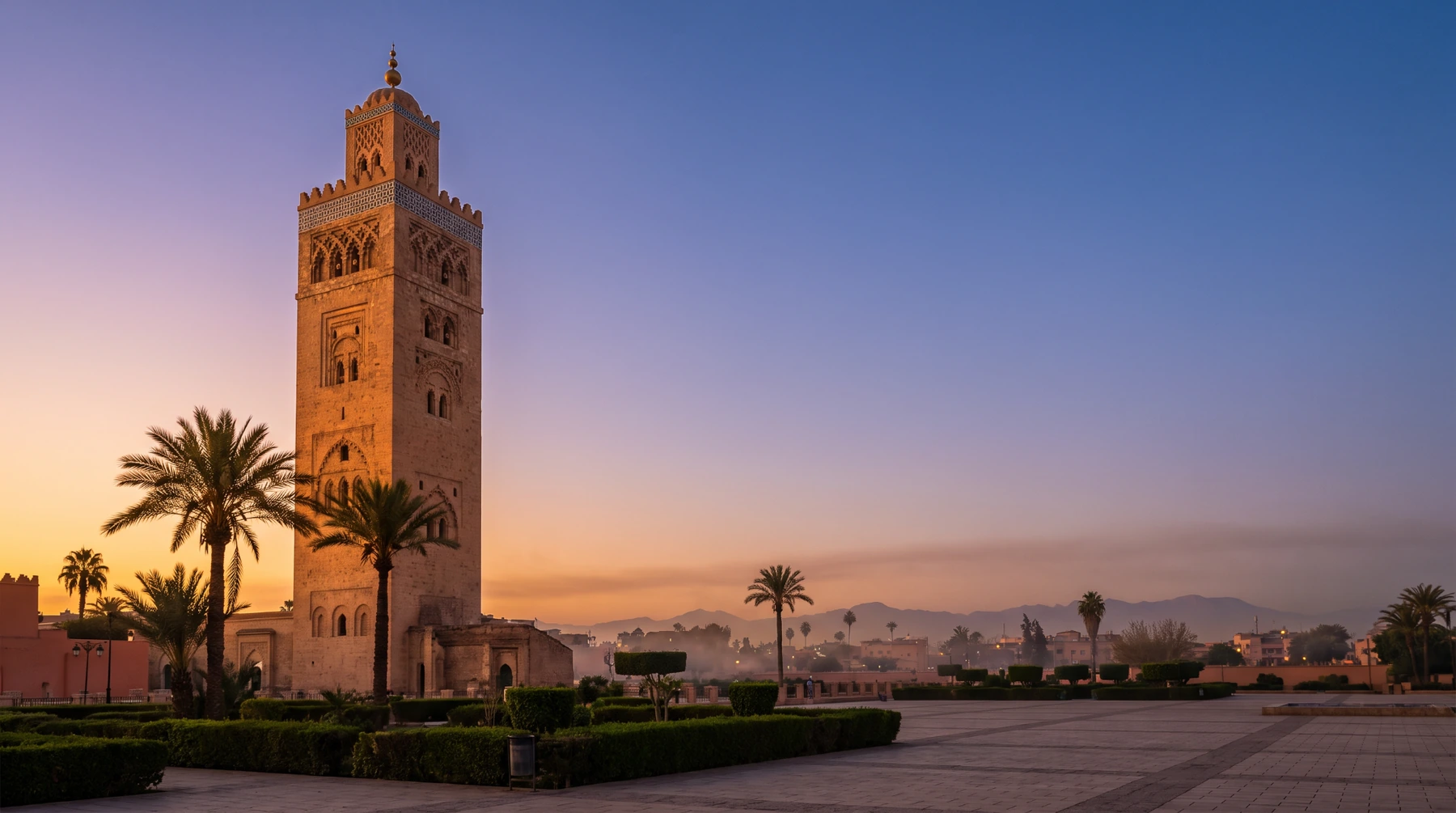
The red walls of Marrakech

Day 12 · Marrakech

The Medina and the Secret Garden

“The medina rewards those who enter it with patience.”

We enter the medina, but not to tick monuments. We move through souks, hidden courtyards, food stalls and workshops — the parts of Marrakech still working — and then into two houses that are not open to anyone.

The first belongs to a collector: Amazigh silver, carpets read like manuscripts, and an afternoon in which you learn that a rug from the Middle Atlas is a signed document if you know the alphabet. The second is a private studio, where a contemporary Moroccan artist works with the same clay, wool and pigment you watched being prepared in Fez, and argues for putting it to entirely different use.

Later, the Majorelle Garden and the Yves Saint Laurent Museum — after hours, with the curator, when the crowds and the heat have both gone. Lunch is somewhere unannounced. The afternoon returns to Dar Ahlam.

The Layer

Makers in their own world, and a closed door opened after hours.

Tonight · Dar Ahlam

A lane in the Marrakech medina

Day 13 · Marrakech

The Atlas Mountains

“The mountains are Marrakech's other half.”

A private day in the High Atlas, on foot, on mule or by vehicle depending on the season and your appetite. We go to one valley, chosen because we know the family at the end of it.

Lunch is in their house: bread out of the ground oven, the women's cooperative that now sells its own oil, a school that has kept its girls two years longer than it used to, sons in Casablanca on video call at the table. You will be asked as many questions as you ask. Tamazight, Arabic, French and English all cross the same plate.

We come back down in the late afternoon. Dinner is private, at Dar Ahlam, built around whatever the day turned out to be about.

The Layer

The personal seam — a real table, in a real house, with the people we actually know.

Tonight · Dar Ahlam

High Atlas mountain village

Day 14 · Marrakech

The Last Morning

“Every great journey needs a final morning.”

The last night in Marrakech is not a farewell dinner. In the courtyard at Dar Ahlam, the fourteen days are given back to you: the photographs of your own week, the panel of zellige you cut badly in Fez and a master finished properly, the recipe written out in the hand of the woman who taught it to you, the register entry for the palms in Skoura, the carpet whose alphabet you can now read. A musician plays the Andalusi repertoire the historian described on your first evening, when none of it meant anything yet.

Then a final unscheduled morning. Breakfast in the courtyard. A last walk in the medina, or simply staying in the house until it is time. Private transfer to Marrakech Menara.

Three of the people you met this fortnight will still be in your life a year from now. That is the part of the journey we cannot put in an itinerary, and the only part we measure ourselves by.

The Layer

The mirror ending: the finale is made of your own week, and the relationships outlive the trip.

Tonight · Dar Ahlam

Marrakech at dusk, the last evening

The Kingdom of Senses

Atlantic · Old Kingdom · Sahara · Oasis · Red City

  • 14 days
  • Casablanca · Rabat · Fez · Sahara · Skoura · Marrakech
  • Royal Mansour · Riad Fès · Private Sahara Encampment · Dar Ahlam

Enquire

Begin this journey

This itinerary is a starting point, not a product. Tell us your dates and we will rewrite it around your family.